
Snowed In, Fed Well, and Softened Back Into Ourselves
Some gifts arrive wrapped in inconvenience.
Snowed In, Fed Well, and Softened Back Into Ourselves
Over the last 48 hours, Northwest Arkansas has been wrapped in snow. Roads quiet. Calendars cleared. The kind of weather that quietly insists you stay put and listen.
So what does a nutritional therapy practitioner do when her love language is cooking and she knows the gut health benefits of fermented foods like sourdough bread?
She feeds people.
When snow clears your calendar, the kitchen becomes a refuge for creating gut-healthy fermented foods.
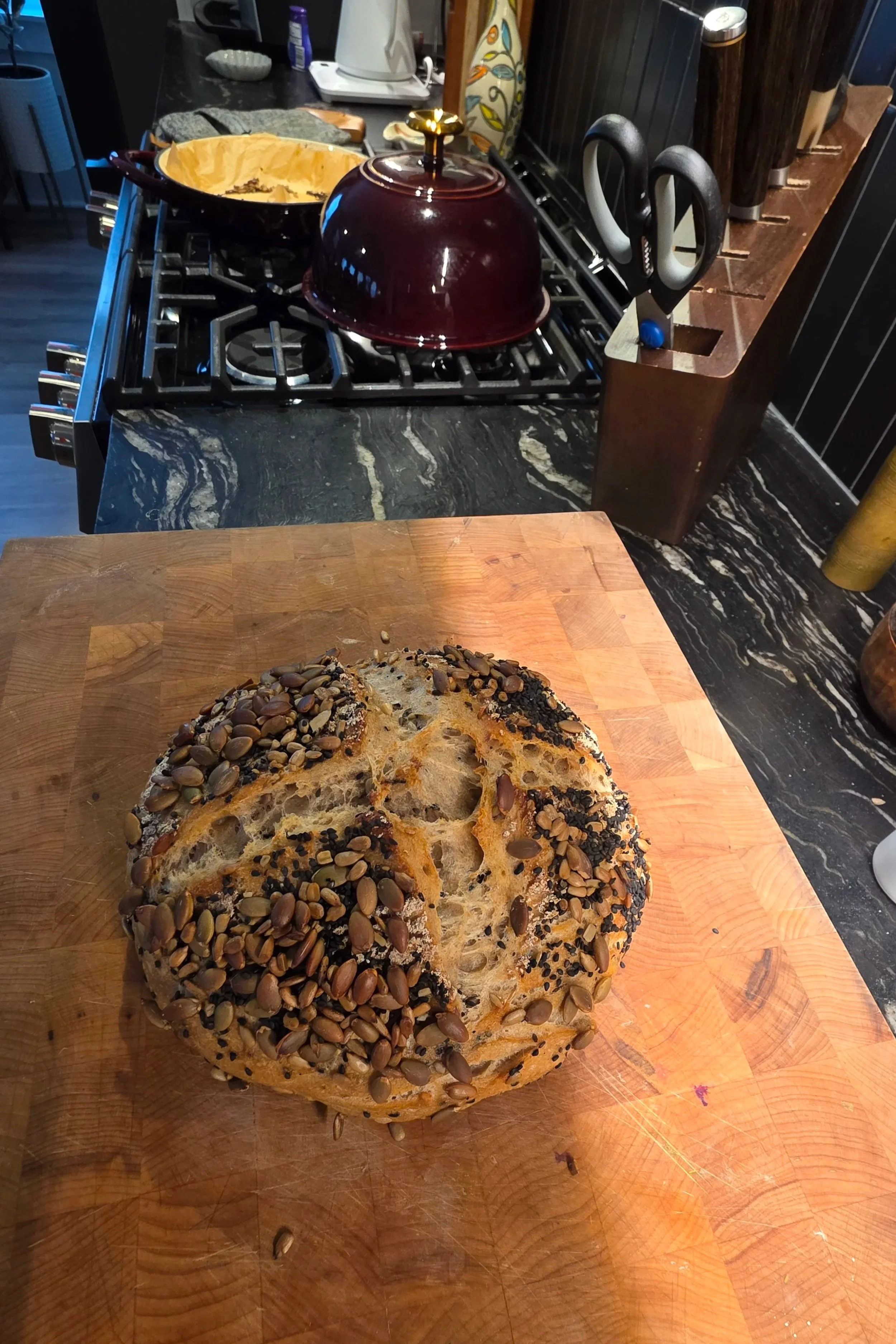
Flour hit the counter early. Two loaves of sourdough bread took shape—one a classic seeded slow ferment, the other the now-viral chili crisp and cheddar loaf. Bold, savory, unapologetically cozy. The kind of bread that perfumes the house and makes waiting feel worthwhile.
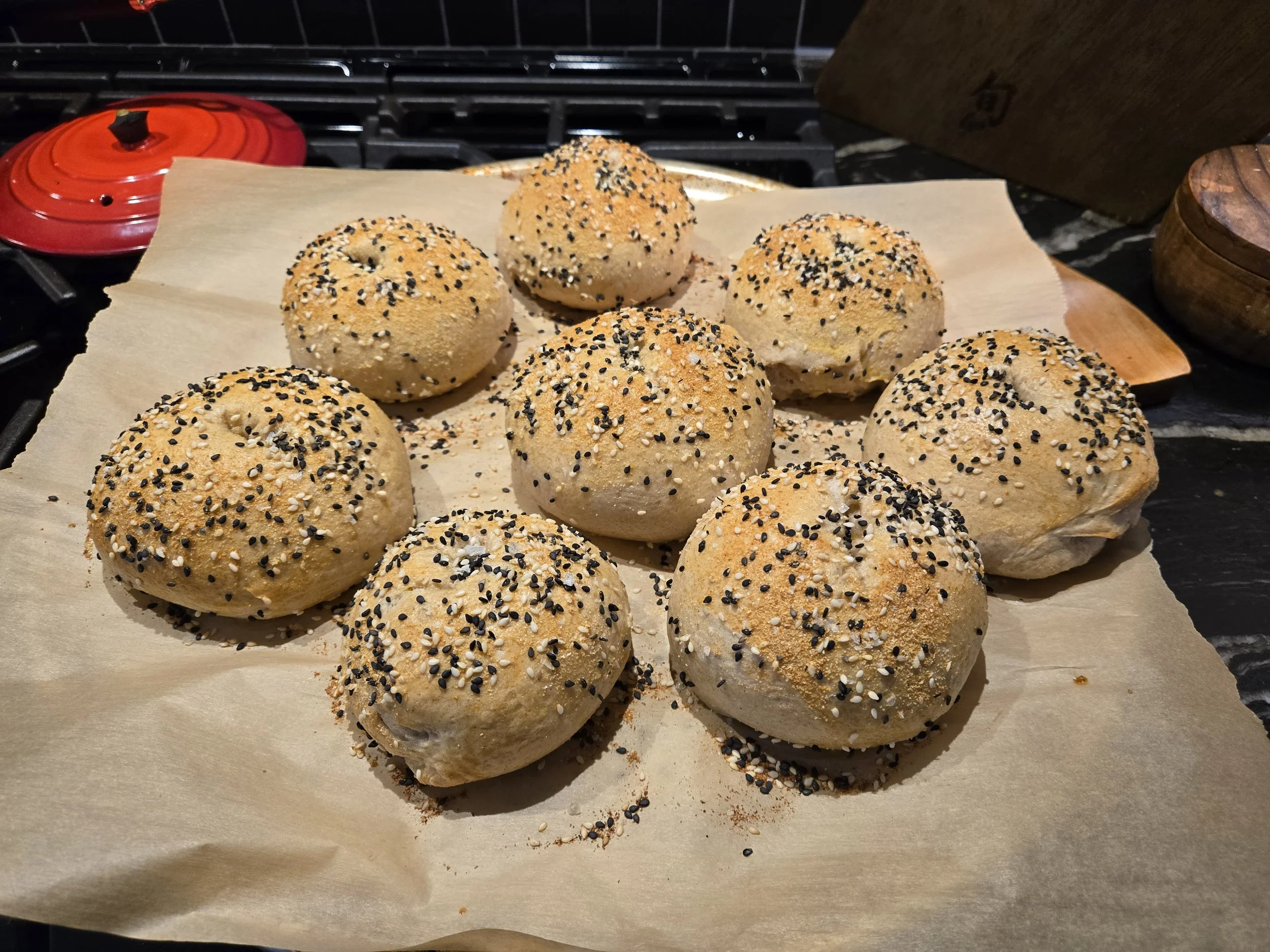
While dough rested and rose, a pot of homemade ramen simmered on the stove. Steam fogging the windows. Food built layer by layer, not rushed, not optimized, just made with attention. My husband joined in too, turning sourdough discard into bagels, proof that nothing nourishing needs to be wasted when you understand how to work with fermented foods.
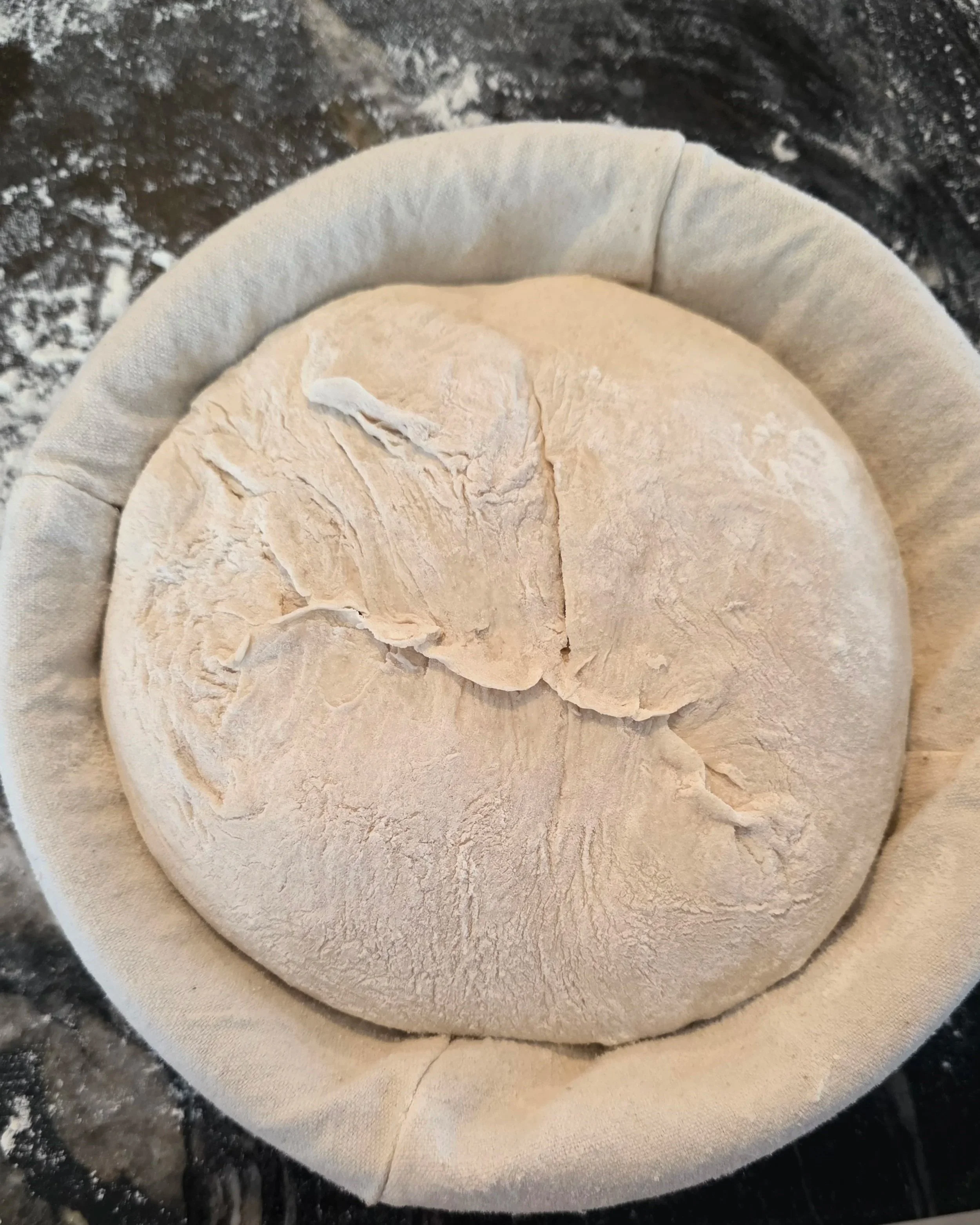
Patience is baked into every loaf—and into every healing journey.
And then we did the most important thing.
We fed our neighbors.
Warm bread passed hand to hand. Bowls shared. No big gestures, just quiet generosity that snow days seem to invite. Food as communication. Food as care.
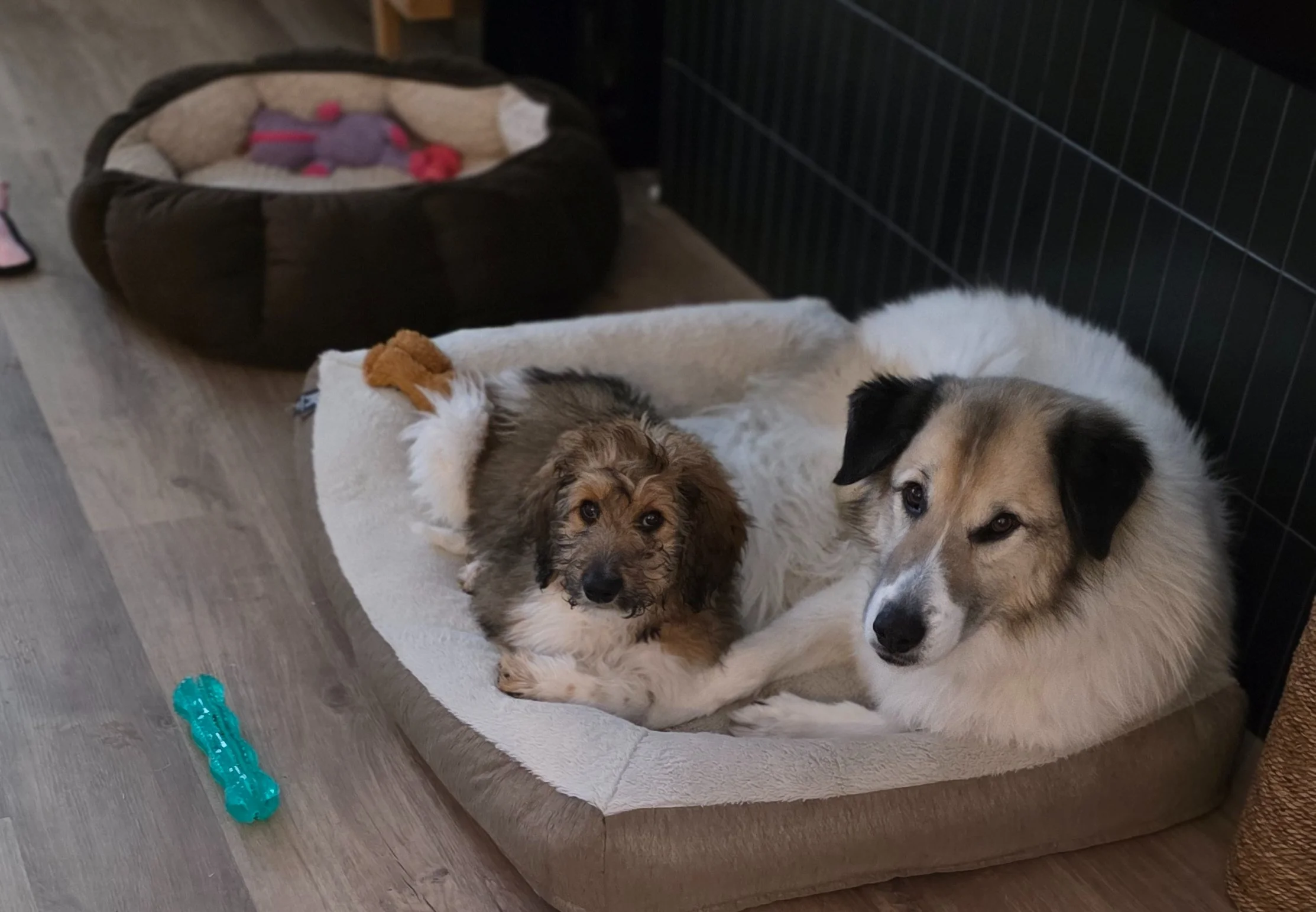
After hours of snow play, this is what parasympathetic rest looks like—exhausted, content, and safe.
Outside, the dogs played until they were joyfully exhausted, tearing through fresh snow like it was brand new every time. Inside, the house softened. Nervous systems followed suit. This is parasympathetic nourishment in real time. Warm food, shared meals, laughter, rest. Nothing forced. Nothing scheduled.
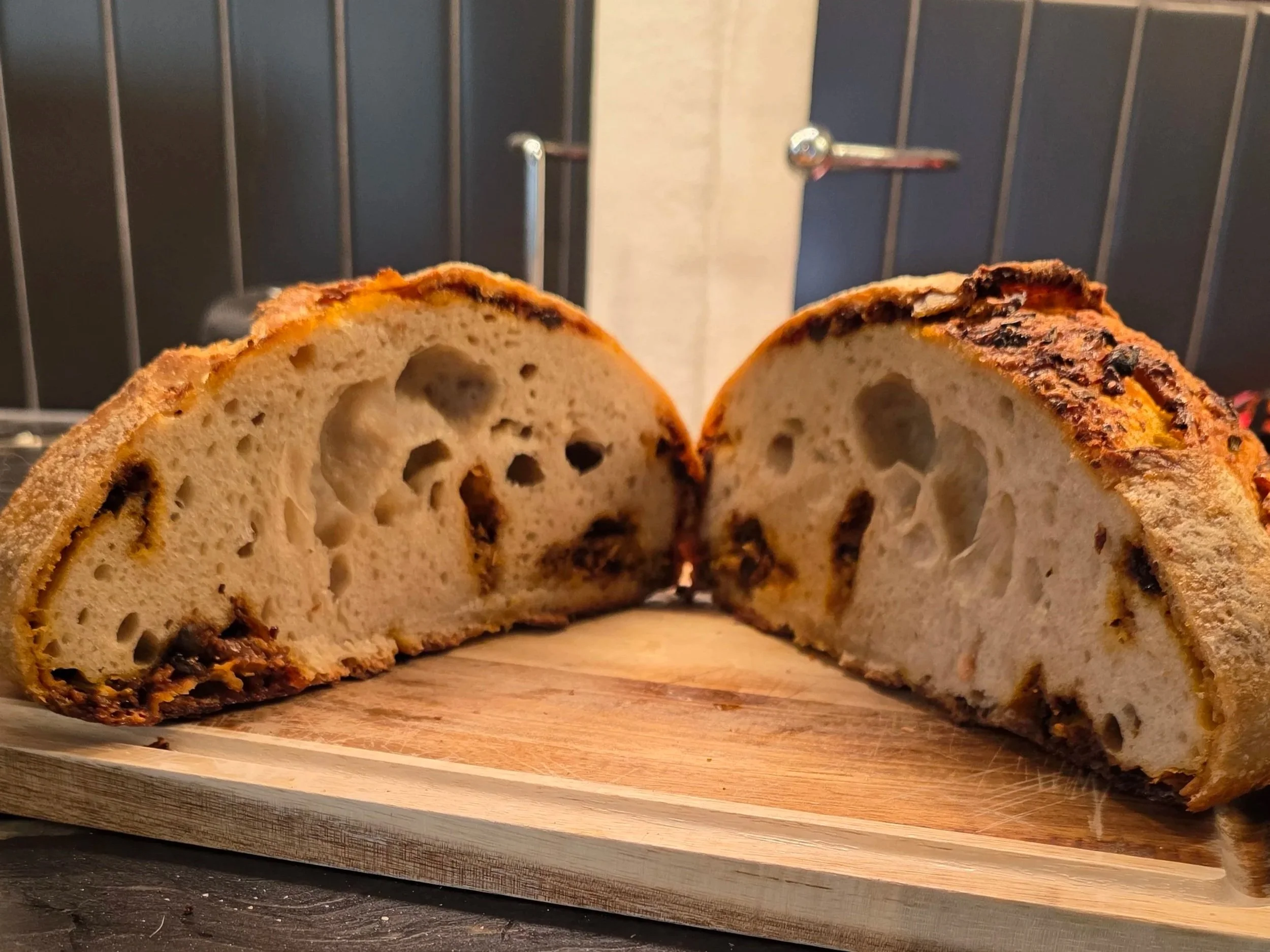
The crumb doesn't lie—fermentation takes time, and that's exactly the point
The Science Behind Sourdough Bread and Gut Health
Here's what I love about sourdough bread as a nutritional therapy practitioner: it's a living lesson in how fermentation creates gut-friendly compounds through the action of lactic acid bacteria and wild yeast. You can't rush this process. The fermentation breaks down gluten and reduces compounds called FODMAPs, making sourdough bread easier to digest than conventional bread.
The wild yeast and lactic acid bacteria in sourdough fermentation produce enzymes that break down phytic acid, which means your body can better absorb minerals like iron, zinc, and magnesium. This fermentation process also creates prebiotics—the fiber that feeds beneficial gut bacteria—supporting your microbiome and digestive health.
It's the opposite of our usual "faster is better" food culture.
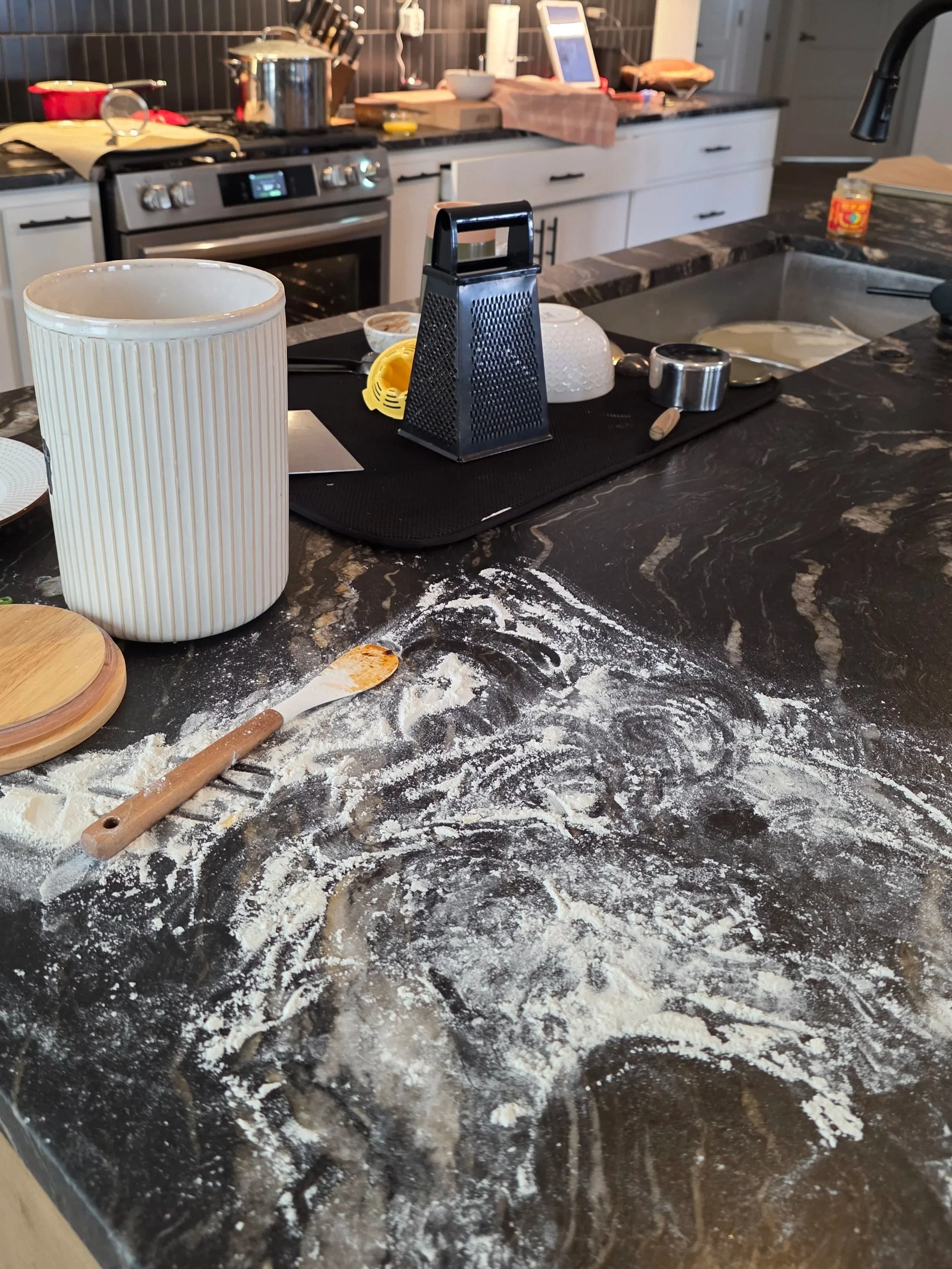
Real life isn't tidy. Real nourishment isn't either.
And that fermentation process mirrors what our bodies need for healing. Real digestion, real healing, real rest—they all require time. They require us to step out of fight-or-flight mode and into the parasympathetic state where repair actually happens.
As a practitioner, I talk a lot about digestion, regulation, and resilience. But moments like this are where those concepts stop being educational and start being lived. Slow food. Safe connection. Predictable warmth. These are not extras. They are foundational to gut health and nervous system healing.
I didn't set out to document this. When the snow started, I had no intention of turning it into a blog post. But as the dough rose and the kitchen filled with warmth, I realized there was something here worth capturing—not for perfection, but for truth. These photos aren't magazine-ready. My kitchen wasn't Instagram-perfect. Flour was everywhere. The counter was a disaster. I had dough under my fingernails and my hair tied back with whatever was within reach. But that's the beauty of creating fermented foods and sharing the real moments of nourishment. It doesn't demand perfection. It just asks that we show up.
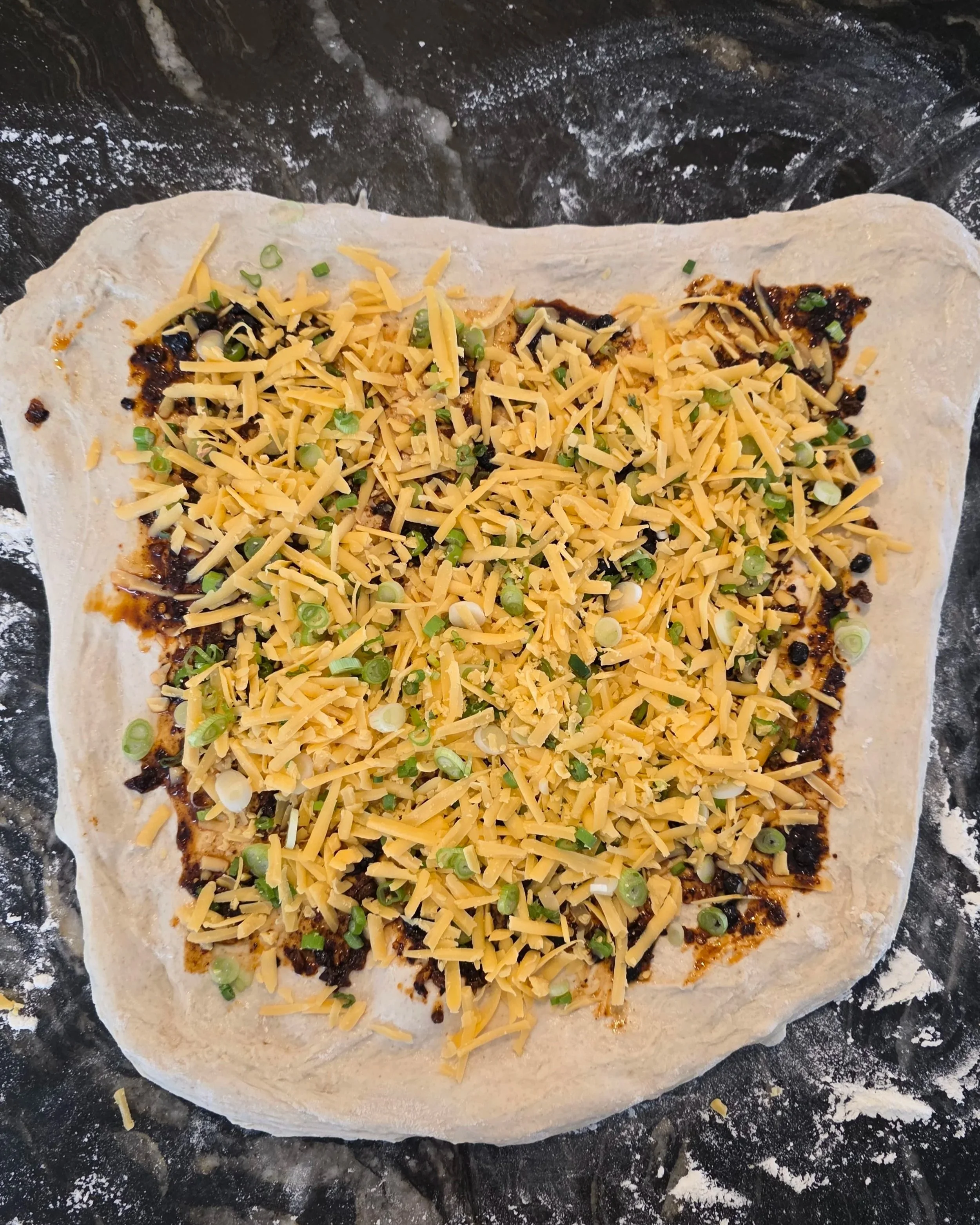
Sometimes the internet gets it right—this chili crisp sourdough was worth the hype.
The chili crisp loaf was a revelation. Using the lamination technique—rolling out the dough and folding in layers of chili oil, sharp cheddar, and fresh scallions—created pockets of savory heat throughout the fermented bread. It was indulgent and nourishing at the same time, which is exactly how food should feel when you're honoring your body instead of following rigid rules.
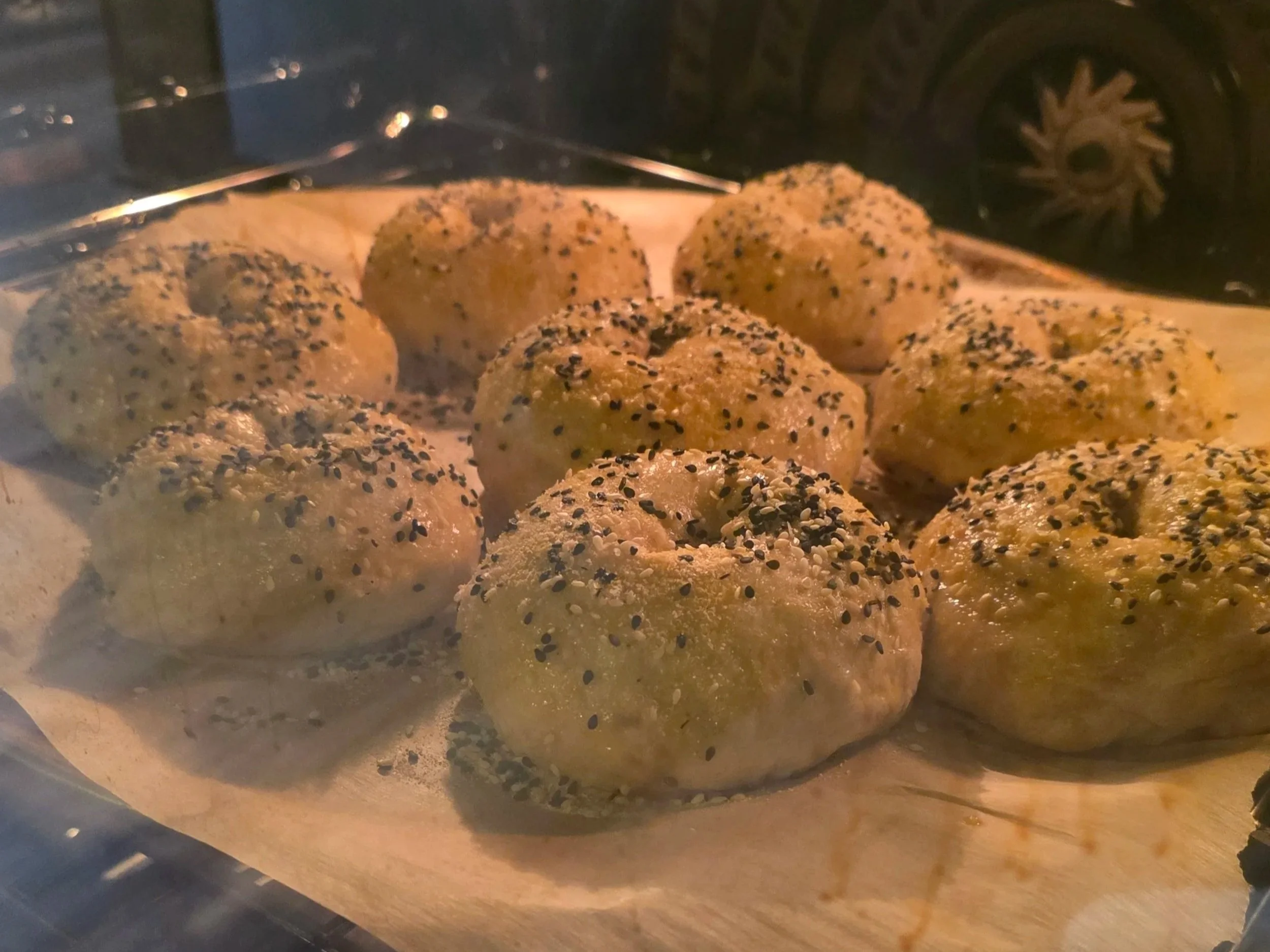
Bagels made from sourdough discard—nothing wasted, everything honored.
By the second evening, our pantry and fridge was stocked with gut-healthy fermented sourdough and nourishing soups of all sorts. Our neighbors were fed. Our nervous systems were calm. The dogs were exhausted from snow play. And I realized that what felt like an interruption was actually an invitation—to slow down, to create, to nourish without pressure.
Snow days don't ask us to be productive. They ask us to be present.
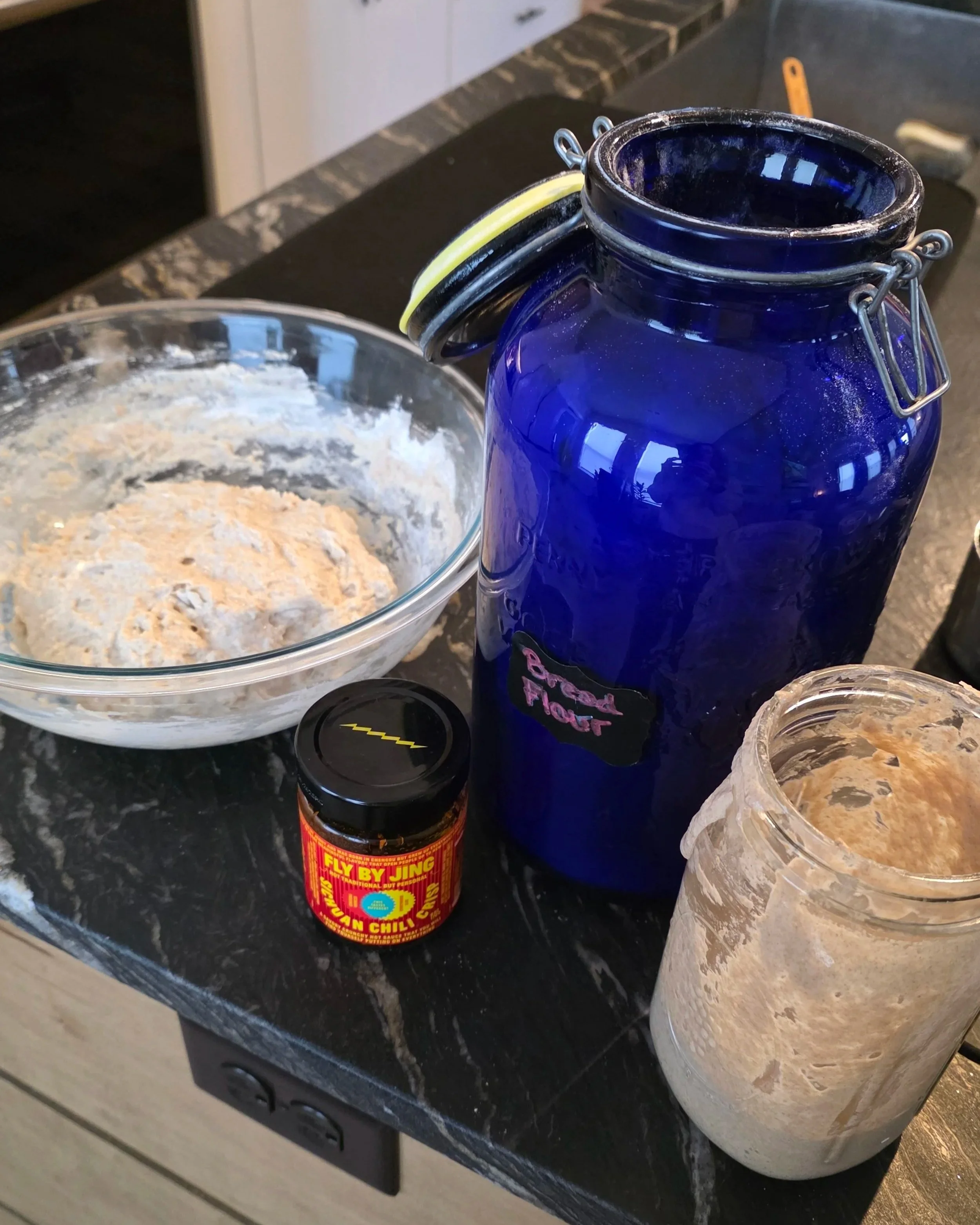
This is where gut health begins—flour, water, time, trust, and wild fermentation.
And sometimes, the most therapeutic thing you can do for your digestive health is bake sourdough bread, feed your people, watch the dogs play, and let your parasympathetic nervous system remember what safety feels like.
The snow has stopped falling. The roads will be cleared. Life will speed back up. But I'm holding onto this—the memory of flour on my hands, steam rising from a Dutch oven, the quiet hum of fermentation happening whether I'm watching or not.
Maybe that's the real lesson about healing. Like baking sourdough bread, health doesn't need our constant attention. It just needs the right conditions and enough time for the fermentation process to work its magic.
More sourdough experiments to come. More slow mornings. More reasons to remember that gut health and nourishment aren't a race.
