
So, I’m Plant Based. And I Made Bone Broth. Let’s Talk About It.
A Plant-Forward Cook… Making Bone Broth? Yes. Here’s Why.
If you’ve followed my cooking for a while, you know my kitchen leans heavily plant based. My meals are full of color, fiber, minerals, gentle flavors, and foods that support digestion and stress resilience. But I also believe in nuance — food choices should be rooted in intention, not perfection. And sometimes, that means embracing foods outside my usual pattern.
For me, two such foods have earned an honored place:
✨ A good-quality cheese
✨ A truly well-made bone broth
Both offer nutrients and depth that plants alone can’t always replicate, and both remind me that nourishment is personal, not dogmatic.
But let me be completely honest…
I had never made bone broth before this. And I was nervous.
Beef broth? I know it’s mineral-rich and deeply supportive, but my palate simply refuses it. I’ve tried. And tried. My body just votes “nope.”
So when this holiday turkey offered up its leftovers, I decided to try something new: a lighter, gentler bone broth. Something soothing, not heavy. Something I could actually sip and enjoy.
And surprisingly… this version is absolutely lovely.
It’s delicate, savory, mineral-rich, and doesn’t carry that intensity beef broth tends to have. It feels like a broth that belongs in a mostly plant-based kitchen — a bridge between the nourishment of animal foods and the gentleness of vegetables, herbs, and scraps that would otherwise be tossed.
It’s the kind of broth that reminds me nourishment isn’t rigid; it simply asks us to be thoughtful.
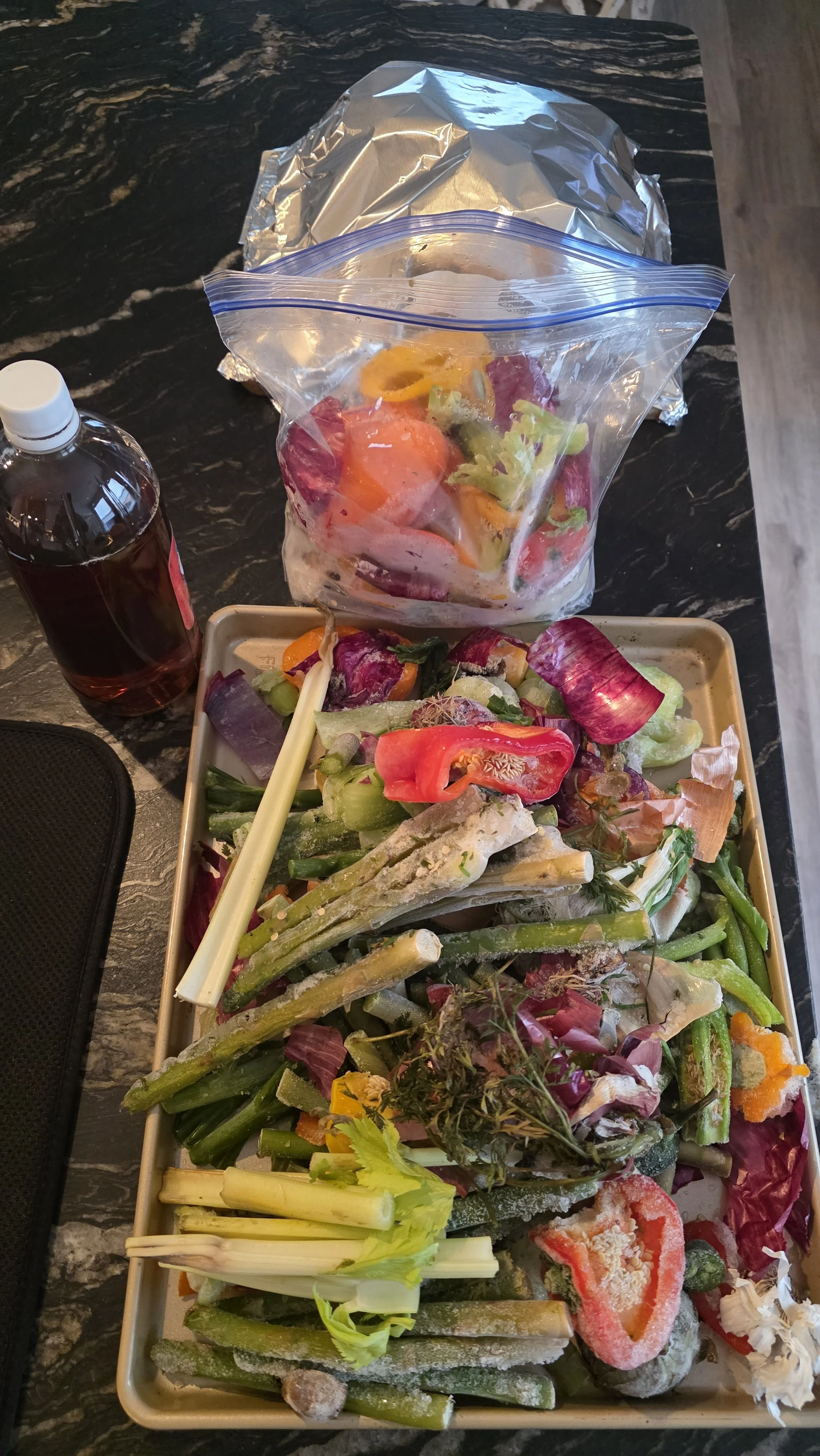
Proof that 90% of my cooking starts with veggie scraps and really good intentions.
How to make bone broth at home:
Bones + Scraps
Turkey carcass, including wings, leg bones, and any roasted bits
Skin and connective tissue
Vegetables + Aromatics
(Mostly from my freezer scrap bag.)
Onion ends
Celery tops
A few carrot ends
Garlic cloves
Mushrooms
Fresh sliced ginger - because GINGER
Herbs like thyme, sage, or rosemary
A splash of apple cider vinegar to help draw minerals from the bones
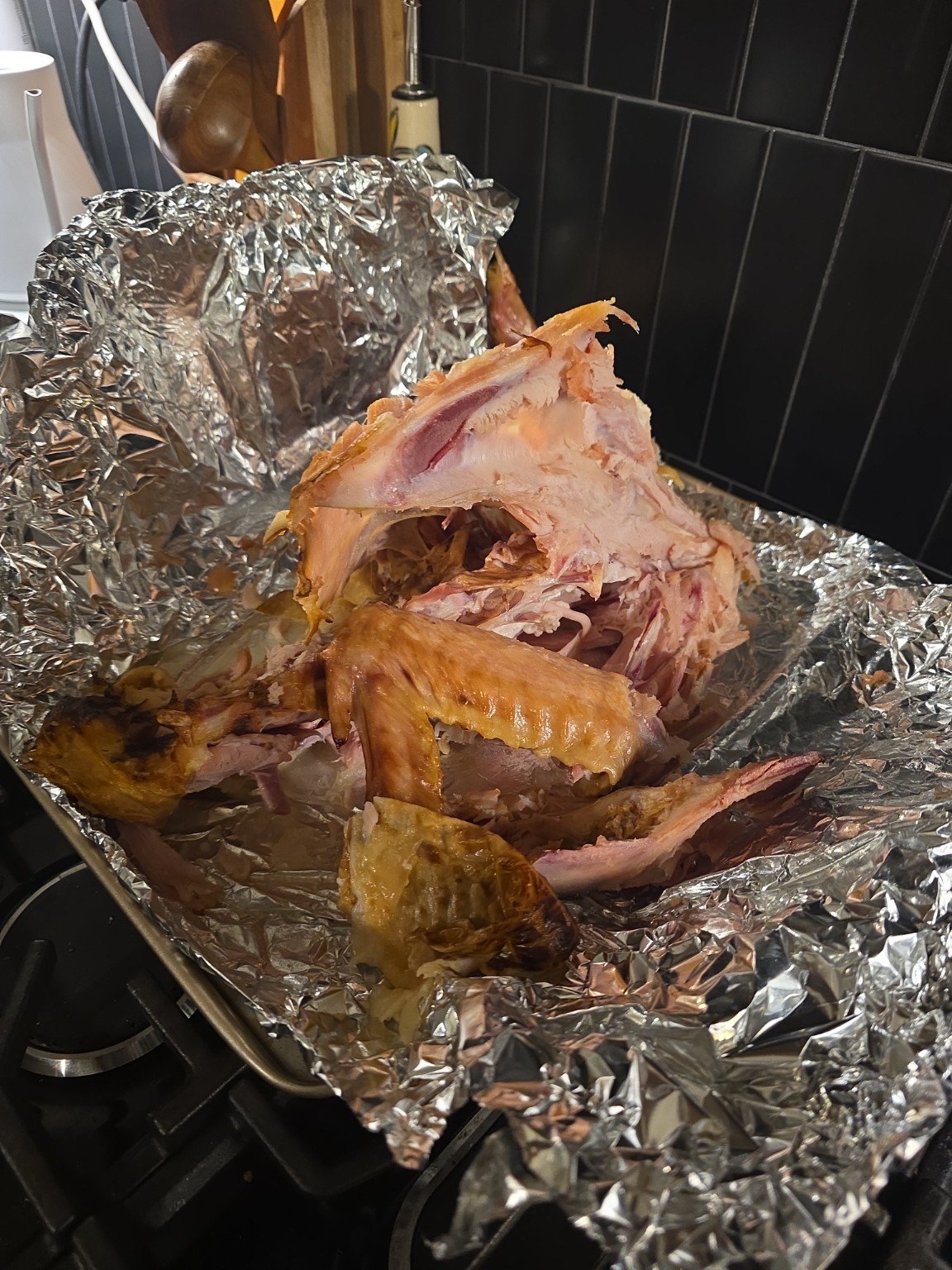
My plant-forward stomach said ‘nope’ 🤢… but my nutrient brain said ‘carry on.’
How I Made It (step by step instructions):
1. Load your stock pot or slow cooker.
Everything goes in — bones, scraps, aromatics, herbs.
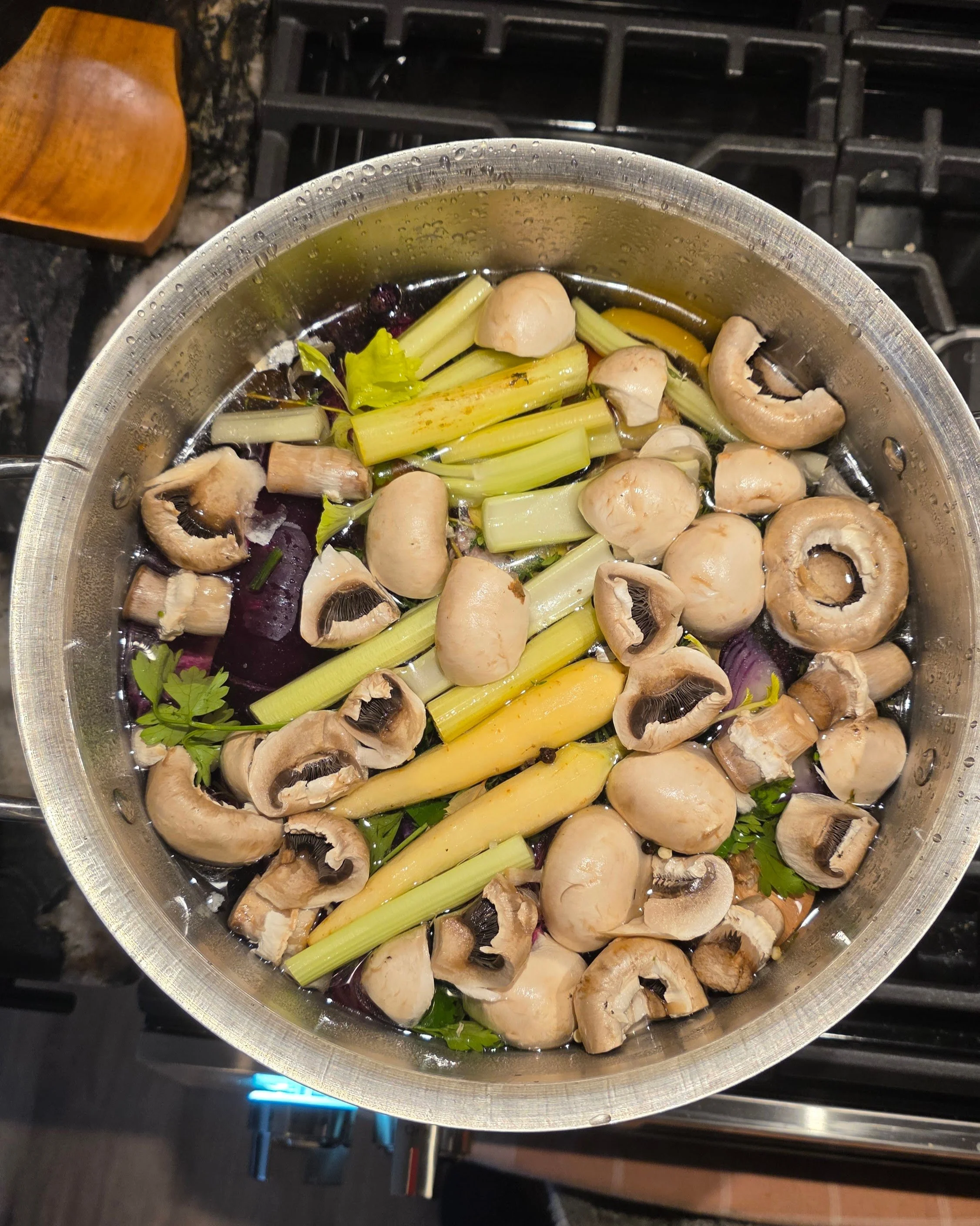
This part felt like coming home again… vegetables to the rescue.
2. Cover with cold water.
Just enough to submerge the contents. This part is important!
3. Bring it to a gentle simmer.
Not a rolling boil. Simmering keeps the broth clear and allows slow mineral extraction.
4. Let it cook long and low.
Stovetop: 8–12 hours
Slow cooker: 12–24 hours
Instant Pot: ~2 hours on high pressure
Longer time = deeper flavor + better gel.
5. Strain it.
Use a fine mesh sieve to remove solids. You can then use those scraps in your compost pile, so nothing goes to waste!
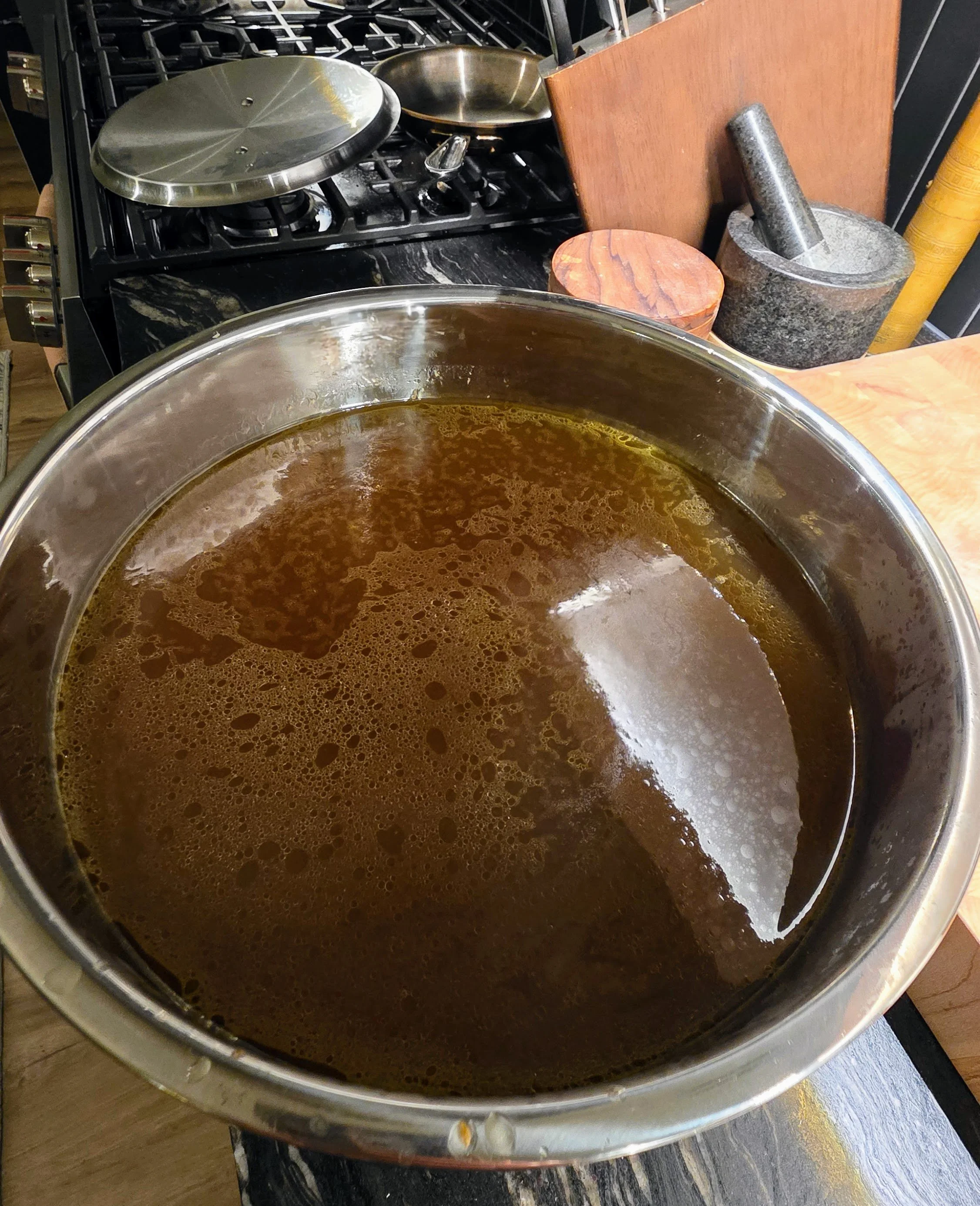
Proof that patience has a flavor.
6. Chill it.
A solid layer of fat rises to the top — you can keep it or scoop it off.
7. Mix in the gel.
If you see a wobbly gelatin layer, celebrate. That’s the good stuff. Mix that in and use it, it’s where a lot of the nourishment comes from!
How Much This Batch Made
From one turkey carcass, I ended up with:
• 4 jars (16 oz each)
• 2 jars (32 oz each)
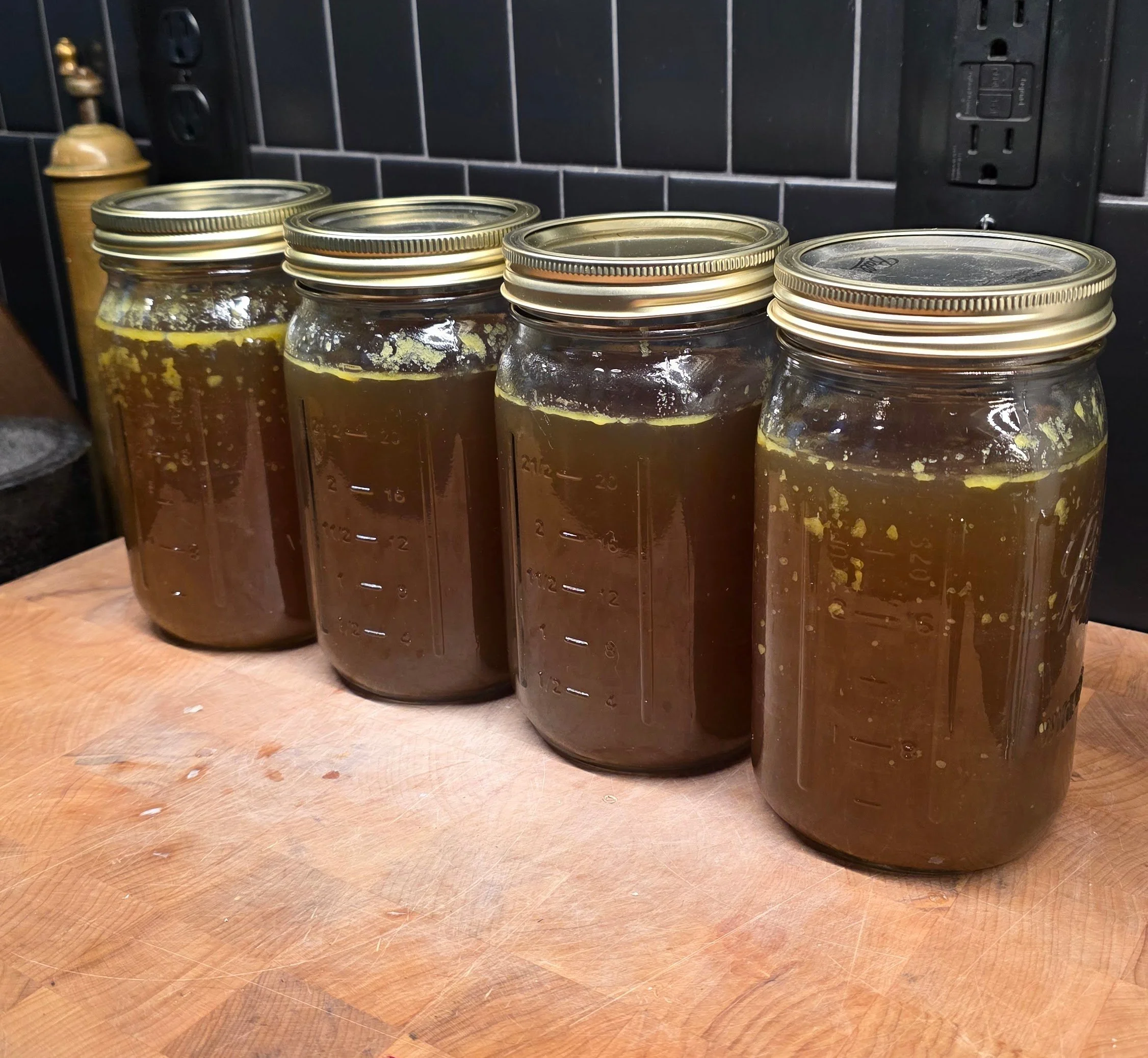
The cozy reward for sticking through the turkey-carcass moment.
Perfect for winter soups, quick sipping mugs, and nutrient-rich cooking.
Storage Tips
Refrigerator: up to 5 days
Freezer: up to 6 months
I like freezing some in ice cube trays for small flavor boosts.
How to Use This Bone Broth
Let it be your kitchen sidekick:
🥣 Sip it on its own with sea salt as gut supportive nourishment
🍲 Build soups, stews, or ramen - I’ve already used both the 32 ounce jars I had in the fridge! I used this broth instead of veggie broth in one of my favorite all time nourishing winter recipes: https://minimalistbaker.com/curried-butternut-squash-soup/
🥘 Add depth to sauces and gravies
🍚 Cook rice or quinoa in it for extra minerals
🫕 Use it to deglaze pans for rich, savory flavor
Even in a plant-forward kitchen, bone broth can be a deeply intuitive choice — supportive, grounding, and a beautiful way to reduce waste.
Final Thoughts
One more thing I want to share, especially for anyone navigating digestive ups and downs: bone broth can be incredibly soothing for the gut. Its natural gelatin gives the lining of the digestive tract a kind of soft, protective hug, helping things feel calmer and more supported. The minerals pulled from the bones — like calcium, magnesium, and potassium — also play quiet but powerful roles in digestion, motility, and overall gut resilience. Even in a mostly plant-based kitchen like mine, this lighter turkey broth feels like a gentle ally for anyone wanting to nourish their digestive system without overwhelming it.
Homemade broth doesn’t need perfection; it just needs time, scraps, and intention. This was my first time making bone broth, and it turned out better than I ever expected. If you try your own, especially if you’re plant-leaning like me, you may find that this lighter, turkey-based version is exactly the gentle introduction you’ve needed.
Warm bowls await. 🍁
