
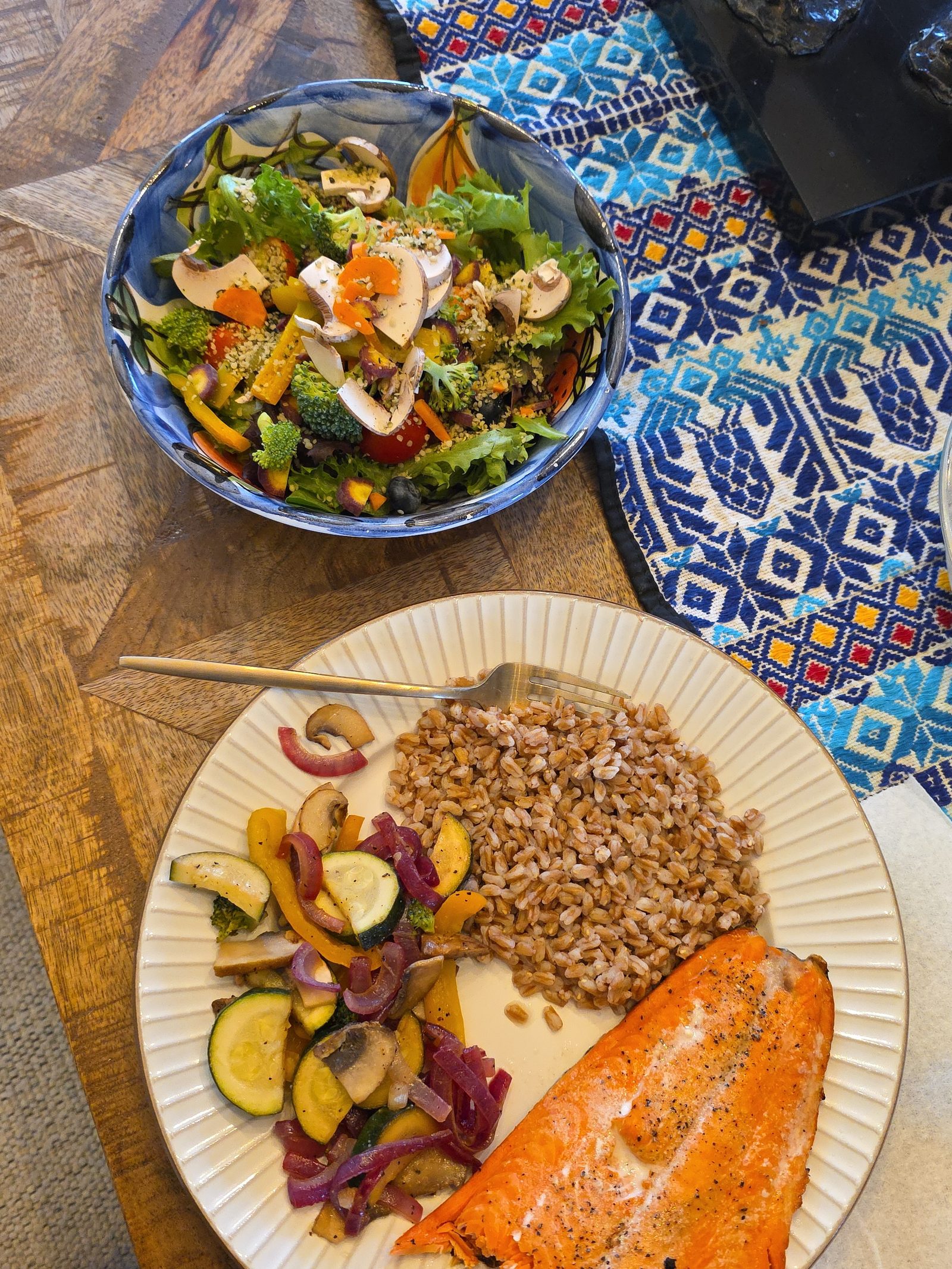
I have been the last person eating at every family dinner, potluck, and restaurant table for as long as I can remember.
Everyone else has pushed their plate away and moved on to conversation while I'm still quietly working through my vegetables. For years I chalked this up to a personality quirk, something a little embarrassing — like I'm the slow kid who didn't get the "we're done now" memo.
Then I picked up Elizabeth Lipski's Digestive Wellness and got to the chapter on digestion, and found out my slowest-eater-in-the-room habit isn't a quirk at all. It's just my body doing exactly what it's supposed to do.
The least glamorous root cause there is
That chapter lists poor chewing and rushed eating as the very first thing that tends to go wrong with digestion. Before stomach acid, before enzymes, before anything else. Of all the things I expected to feel a little smug about at the dinner table, my inability to keep pace with everyone else was not one of them.
Turns out chewing is the actual first step of digestion, not a formality before the real work starts in your stomach. It mechanically breaks food into smaller pieces, which takes pressure off everything downstream and helps your body actually get to the nutrients you put real effort into sourcing. More chewing also means more contact with saliva — which isn't just there to help things slide down. It carries enzymes that begin breaking down fat, carbohydrate, and protein before food ever leaves your mouth, it helps remineralize enamel, and it's a big part of why food tastes like anything at all.
The study that made me feel better about being last
There's a study in the American Journal of Clinical Nutrition where researchers had young men chew each bite either 15 or 40 times.1 The group chewing more ate meaningfully less at that meal, and their gut hormones responded differently too — ghrelin, the one that says "keep going," came down, while the ones associated with feeling satisfied went up.
What I take from that isn't about the size of the meal. It's that there's a built-in conversation happening between your gut and your brain while you eat, and it takes time to unfold. Rushing is the easiest way to talk over it.
There's a similar idea in a lot of longevity research — the Okinawan principle of hara hachi bu, or eating until you're about 80% full instead of stuffed. I've never once tried to follow that on purpose. But it tracks with everything above: if you're going slowly enough to actually notice the signal, you tend to land somewhere around comfortably satisfied rather than uncomfortably full, without counting a single bite.
There's an old custom of chewing each bite 30 times, too. I'm not sure I've ever consciously counted, and I don't plan to start — that feels like a fast track to making dinner feel like homework. But apparently I've been landing somewhere in that neighborhood by accident my whole life, while everyone around me speed-runs their plate.
Progress, not perfection (even for the fast eaters)
I want to be clear that this isn't me quietly judging anyone who eats fast. Plenty of that is just how someone's wired, or the pace their day demands, and that's not a character flaw either. If you want to experiment, you might try putting your fork down between bites, or simply noticing the first few chews of the first few bites — that's usually enough to change the pace without turning a meal into a task.
But if you've ever felt a little self-conscious about being the slow one at the table, consider this your permission slip. The thing I used to apologize for might be the most useful habit I have, and I didn't even build it on purpose.
There's a lot more in that chapter worth chewing on. (Couldn't resist.) In the meantime, I'll be the one still eating after everyone else has left the table — on purpose, apparently.
Sources: 1 Li, J., Zhang, N., Hu, L., Li, Z., Li, R., Li, C., et al. (2011). Improvement in chewing activity reduces energy intake in one meal and modulates plasma gut hormone concentrations in obese and lean young Chinese men. American Journal of Clinical Nutrition, 94(3), 709–716. | 2 Lipski, E. Digestive Wellness. McGraw Hill.