
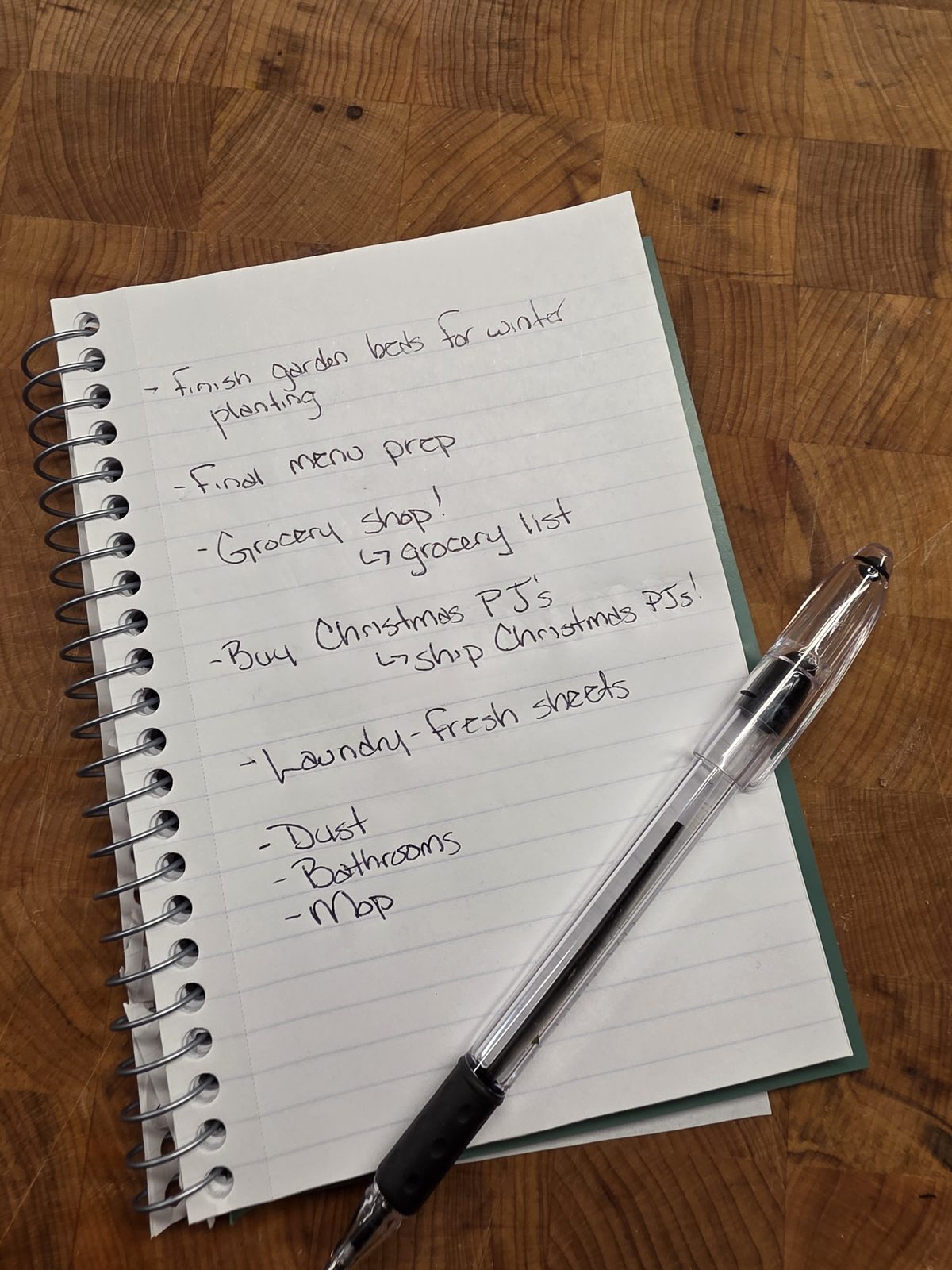
Holiday Survival Series, Part 3. We're taking the season one piece at a time. So far we've covered how to balance blood sugar during the holidays and how to get better sleep during the holidays. This week: the to-do list that's keeping half of us up at night.
Thanksgiving is ten days away. You have a grocery list, a gift list, a list of who cannot sit next to whom, and a list of lists you haven't made yet. Somebody just texted “so what's the plan?” in the family group chat, and your shoulders are now somewhere up around your ears.
Hi. Welcome. Grab a seat (not that one, that's Uncle Gary's).
We all know holiday stress is a thing. It's not just you. In a 2023 American Psychological Association poll, nearly 9 in 10 adults said something about the holidays stresses them out, and about 4 in 10 said their stress actually goes up this time of year. The top three reasons? Money (58%), finding the right gifts (40%), and missing loved ones (38%).1 So if you're feeling it, you're in very good company.
This is part three of my holiday survival series, and last week I promised we'd talk about the thing that's keeping half of us up at night: the to-do list. So this week, we're managing holiday stress together, as a team.
What holiday stress actually does to your body
Here's the quick science. When you're stressed, your body releases adrenaline and cortisol, your “fight or flight” hormones. That system was built to help us run from a saber-toothed tiger. The problem is, your body can't really tell the difference between a tiger and your aunt asking why you're still not married. Same alarm bells either way.
When that alarm goes off, a few things happen:
- Your blood sugar goes up. One of cortisol's jobs is to make fuel available so you can run from that tiger. Do that over and over, and you're right back on the blood sugar rollercoaster from part one.
- Your sleep gets lighter. A body that thinks it's in danger doesn't want to fall into deep sleep. Hello, 3 a.m. ceiling staring (see part two).
- Your digestion takes a back seat. Your body has two modes: “fight or flight” and “rest and digest.” It can't do both at once. If you're eating Thanksgiving dinner in full fight-or-flight mode, your gut is not at its best. (Hold that thought. That's next week.)
None of that is a problem in short bursts. A little stress is normal and even helpful. It's the stress that never shuts off, day after day, all season long, that wears us down.
Foundations first: stress doesn't work alone
If you're new here, I work with clients using a foundations first approach: digestion, blood sugar regulation, stress, sleep, and a nutrient-dense way of eating. They all lean on each other. Steady blood sugar makes stress easier to handle. Good sleep lowers your stress load. Less stress lets your digestion actually do its job. Pull on one thread and the whole sweater moves.
That also means there's no one right way to manage stress. What calms one person (a long run, a loud playlist) might wind someone else up. So read these tips like a menu, not a prescription. Pick the two or three that fit your life and your body.
8 holiday stress tips that actually work
1. Brain-dump the to-do list before bed.
If your brain treats bedtime as the official time to review everything you forgot, this one's for you. In a study of 57 young adults who slept in a sleep lab, one group spent five minutes before bed writing a to-do list for the next few days, and the other group wrote about tasks they'd already finished. The to-do list writers fell asleep faster.2 Getting it on paper tells your brain it's allowed to stop holding it. Keep a notepad by the bed. Not your phone. A notepad.
2. Try the “cyclic sigh” (5 minutes, no equipment).
This is my favorite one because you can do it anywhere, including the bathroom at your in-laws'. Breathe in through your nose. When your lungs feel full, sneak in a second, smaller sip of air on top. Then let it all out, slowly, through your mouth. Repeat for about five minutes.
In a Stanford study, 111 healthy adults did five minutes of breathing exercises or mindfulness meditation every day for a month. The cyclic sighing group had the biggest daily boost in positive mood and the biggest drop in their resting breathing rate, even compared with meditation.3 Long, slow exhales are like a direct line to your body's “we're safe now” switch.
3. Get outside for 20 minutes.
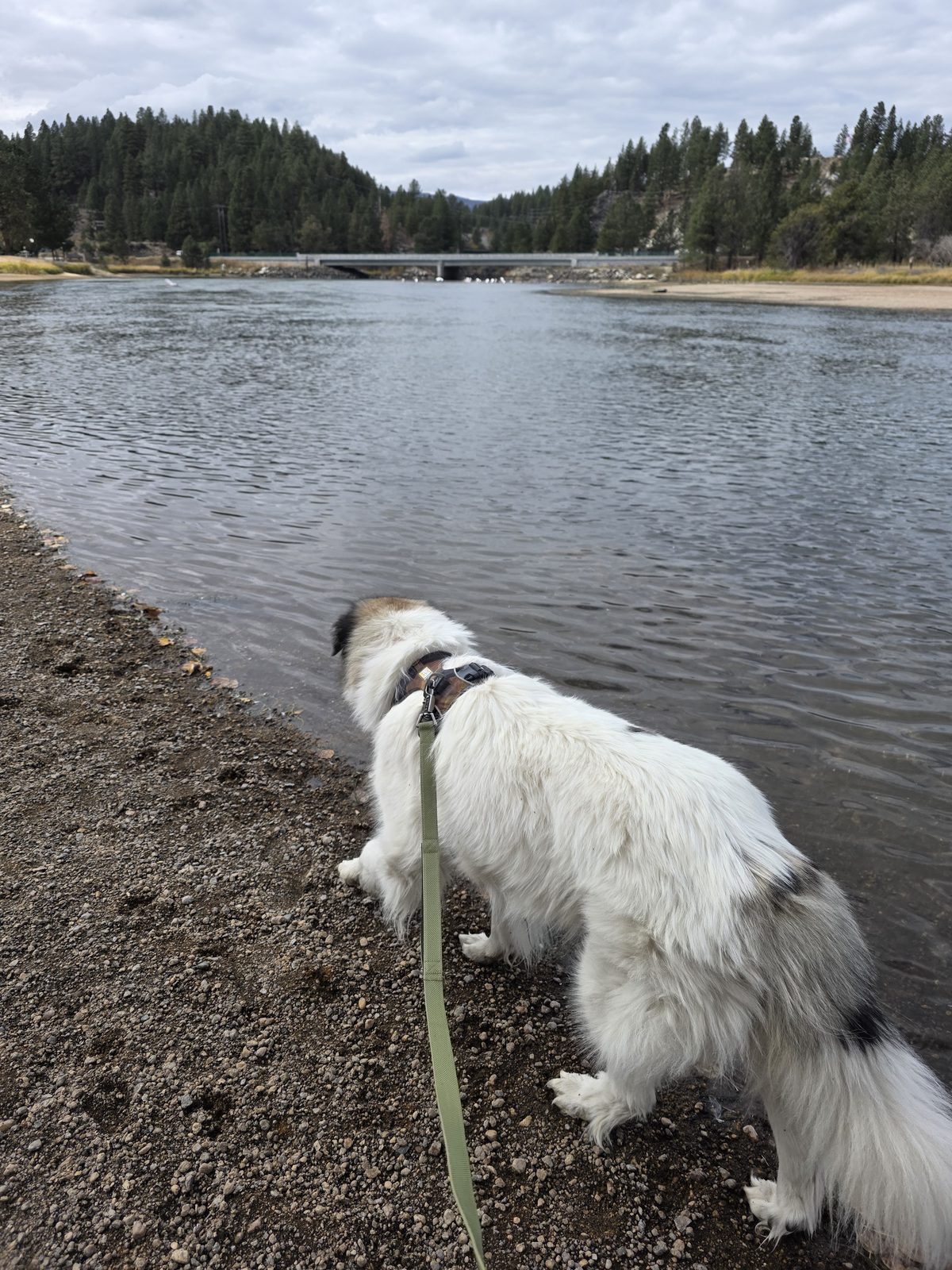
In one study, 36 city dwellers spent at least 10 minutes in a nature spot of their choosing at least three times a week for eight weeks. Their cortisol dropped about 21% per hour more than its normal daily decline, and the biggest bang for their buck came at 20 to 30 minutes.4 The researchers literally called it a “nature pill.” You don't need a mountain. A walk around the block with the dog, coffee on the porch, or standing in the backyard in your slippers all count. Bonus: morning light helps your sleep too.

4. Don't run on coffee and cookies.
I know. The holiday cookie tin is right there. But skipping meals and grazing on sweets and caffeine sends your blood sugar up and down all day, and when it drops, your body releases (you guessed it) more stress hormones. That shaky, snappy, “if one more person asks me a question I will scream” feeling is sometimes just low blood sugar wearing a stress costume. Start the day with a real breakfast with protein, and don't show up anywhere starving. Part one has the whole game plan.
5. Protect your sleep like it's the last pie.
Stress steals sleep, and short sleep makes everything feel more stressful the next day. It's a loop. If you only pick one tip from part two, keep your wake-up time steady and give caffeine a curfew.
6. Lower the bar (lovingly).
Here's your permission slip: the holidays don't have to be perfect to be good. Store-bought pie is still pie. Gift bags are a gift-wrapping strategy. It's okay to say no to the third party in one weekend, and it's okay to ask your sister to bring the rolls. Pick the one or two traditions that really matter to your family, and let some of the rest go this year.
7. Make a money plan before the shopping starts.
Money was the number one holiday stressor in that APA poll, so let's not pretend it isn't. Set a gift budget before you start shopping, not after the credit card statement shows up in January. A family name draw, a $25 limit, homemade gifts, or “experiences, not stuff” can take a lot of pressure off everyone, not just you.
8. Ground yourself with warmth and rhythm.
A little Ayurvedic wisdom I love: in Ayurveda, late fall and early winter are vata season. Vata is the energy of wind and movement, which is cold, dry, light, and always on the go. Sound like anyone's holiday calendar? Too much vata shows up as racing thoughts, worry, poor sleep, and that scattered, can't-sit-still feeling. The fix is the opposite: warmth, routine, and grounding. Warm, cooked meals at regular times. A cup of herbal tea. A few minutes of warm oil massage on your feet before bed. And magnesium-rich foods like pumpkin seeds, leafy greens, and dark chocolate help support a calm nervous system too (I wrote all about that in The mineral behind the calm).
When it's more than just holiday stress
Sometimes stress isn't really about the holidays at all. If you've been running on empty for months, feel “wired but tired,” wake up at the same time every night, need caffeine just to function, or notice your digestion goes haywire every time life gets busy, that's worth a deeper look. We look for the root cause instead of just treating the symptom, and very often stress is tangled up with one of the other foundations: blood sugar, sleep, digestion, or missing nutrients.
Important
The holidays can be heavy for a lot of us. If there's an empty chair at your table this year, please be gentle with yourself. If you're feeling anxious or down most days, it's lasting past the season, or it's getting in the way of daily life, please talk with your doctor or a mental health professional. If you're in crisis or having thoughts of harming yourself, call or text 988 to reach the Suicide & Crisis Lifeline any time. And if you're thinking about stress supplements like ashwagandha or other adaptogens, check with your provider first, because some of them can interact with medications.
Work with a Nutritional Therapy Practitioner in Southwest Missouri and Northwest Arkansas
There's no single right way to manage holiday stress, because there's no single right body. If stress has been running the show for a while and you want a plan built around you, I'd love to help. I work with clients in person in Southwest Missouri and Northwest Arkansas, and virtually anywhere in the U.S.
It starts with a free 30-minute discovery call. Book yours here, and let's get you to January feeling calm, steady, and like yourself. 🌿
Next Monday is Thanksgiving week, so part four of the holiday survival series is all about digestion. Because you deserve to actually enjoy that feast, not just survive it. See you then!
Sources:
1 American Psychological Association. Even a joyous holiday season can cause stress for most Americans. Press release, November 30, 2023 (Harris Poll of 2,061 U.S. adults).
2 Scullin MK, Krueger ML, Ballard HK, Pruett N, Bliwise DL. The effects of bedtime writing on difficulty falling asleep: A polysomnographic study comparing to-do lists and completed activity lists. Journal of Experimental Psychology: General. 2018.
3 Balban MY, et al. Brief structured respiration practices enhance mood and reduce physiological arousal. Cell Reports Medicine. 2023;4(1):100895.
4 Hunter MR, Gillespie BW, Chen SY. Urban nature experiences reduce stress in the context of daily life based on salivary biomarkers. Frontiers in Psychology. 2019;10:722.
This information is educational and not a substitute for medical advice. Always consult your healthcare provider before making changes to your medication.
Work with Ashley
If stress has been running the show all year, not just in December, let's look at what's really going on underneath. It starts with a free 30-minute discovery call.
See How We Work Together