
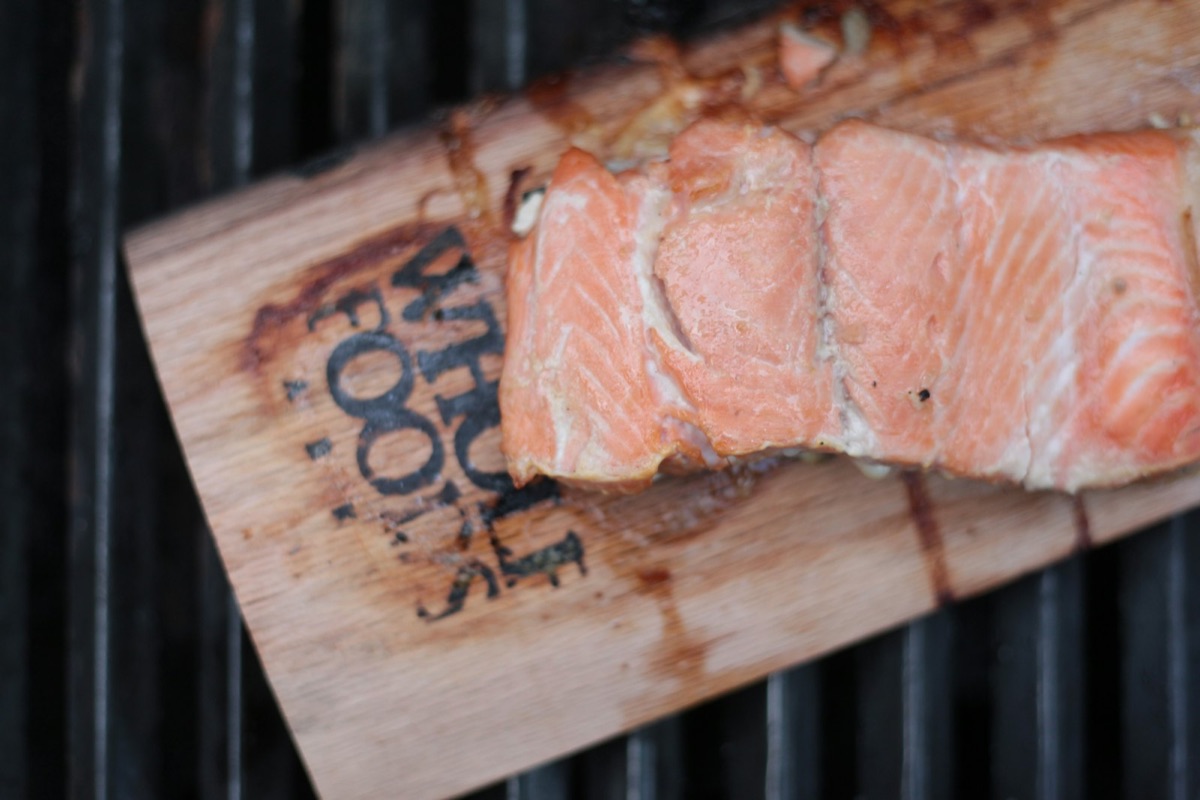
The Terrain Series, No. 3. A series on how everyday food shapes the body's inner terrain — the conditions that either invite disease or help keep it at bay. This week: the most colorful fish in the ocean.
I'm 53 years old, and until recently I had never — not once in my life — eaten salmon.
I'm not a fish person and never have been. You will not catch me throwing down at a crawfish boil. And on top of that, I've been vegan since 2019. These days I'd honestly call myself vegan-adjacent — I go plant-based whenever I can, and that's still my default.
So why am I, of all people, writing what amounts to a love letter to wild salmon? Two reasons. First: once I learned what astaxanthin actually does in the body, I couldn't unsee it. Second: it's how I work. Before I ever hand a client a recipe, I make it myself first — I need to know it's something a real person can actually cook and genuinely enjoy. That's exactly how I found myself, at 53, standing at the stove cooking my first-ever piece of wild-caught salmon. If I'm going to ask you to consider it, I owe it to you to have done it myself first.
So let's talk about that word: astaxanthin. Most people have never heard it, and if you have, you probably had to Google how to pronounce it. (I still do.) But if you've ever wondered why wild salmon has that deep, luscious orange-pink color — the kind that looks almost painted on — that's your answer. And that color is doing a whole lot more than making dinner beautiful.
Astaxanthin is a natural pigment produced by tiny freshwater algae. Wild salmon get it by eating krill and other small marine creatures, and they concentrate it in their flesh over their lifetime. Most importantly, this only happens in wild-caught salmon, not farmed. Research now shows it's one of the most powerful anti-inflammatory compounds found in food — and it works in a way that matters deeply when we talk about the body's terrain.
What is astaxanthin, and why does it matter?
Think of astaxanthin as a bodyguard for your cells. It's a fat-soluble pigment — meaning it dissolves in fat, travels to places water-soluble antioxidants can't reach, and protects your cells from the inside out. Unlike most antioxidants, it can span the entire cell membrane, guarding both layers at once. Even the most well-known antioxidants — vitamin C and vitamin E — can't do that. It's a genuinely remarkable compound.
Here's why that matters: chronic, unresolved inflammation is now recognized as one of the key drivers of cancer progression. It helps create the very environment cancer cells need to grow, spread, and survive. Astaxanthin directly interferes with that process — and it does so through several pathways at once.1
Wild-caught vs. farmed: this choice actually matters
Here's something most people don't know: the salmon at your average grocery store labeled "fresh" is almost certainly farmed. And farmed salmon contains virtually no real astaxanthin.
Wild salmon eat algae and krill — the source of astaxanthin in nature — so their flesh is genuinely rich in it. Farmed salmon eat processed feed pellets and produce none at all. The color you see in farmed salmon? That's synthetic dye added to the feed. It's cosmetic, not nutritional. Beyond that, farmed salmon tend to carry more inflammatory omega-6 fats, fewer of the beneficial omega-3s, and may contain antibiotic residues. The choice between wild and farmed isn't a preference — it's a fundamentally different food.
How to find the real thing:
- Look for "wild-caught Alaskan sockeye" — sockeye has the highest astaxanthin content of any salmon.
- Look for MSC (Marine Stewardship Council) certification — it confirms sustainable, traceable sourcing.
- Avoid anything labeled "Atlantic salmon" — that's almost exclusively farmed.
- Frozen is completely fine: Vital Choice, Costco's Kirkland wild-caught Alaskan, Trader Joe's wild Alaskan, and 365 by Whole Foods sockeye are all reliable.
- Canned works too: Wild Planet wild sockeye comes in a BPA-free can, single ingredient, sustainably caught.
How it fights inflammation
Here's the simplified version of what the research shows:1 astaxanthin turns down the volume on inflammation at multiple points — not just one. It keeps the "inflammation switch" from flipping on in the first place, reduces the inflammatory messengers (like IL-6 and TNF-α) that are associated with worse outcomes, and activates your body's own built-in antioxidant defenses at the same time. Think of it as a fire extinguisher for a body that's been quietly smoldering.
Why does this matter so much for the terrain? Because chronic low-grade inflammation is the environment cancer cells thrive in. Cool the inflammation, and you make that environment less hospitable.
A careful word on cancer
A 2020 systematic review found that astaxanthin works against cancer cells through several overlapping mechanisms in the lab2 — helping trigger the natural self-destruct process in cancer cells (apoptosis), slowing their uncontrolled growth, making it harder for them to migrate and invade new tissue, and even disrupting the glucose metabolism cancer cells depend on (a familiar theme if you read the last post on sugar).
This research was largely done in laboratory and animal studies. Astaxanthin is not a cancer treatment, and I'm making no such claim. What it is: a potent, well-researched anti-inflammatory compound that supports the kind of terrain where disease has a harder time taking hold. That's what food-first nutrition is all about — not magic bullets, just steadily tending the soil.
The Ayurvedic connection: 5,000-year-old food as medicine
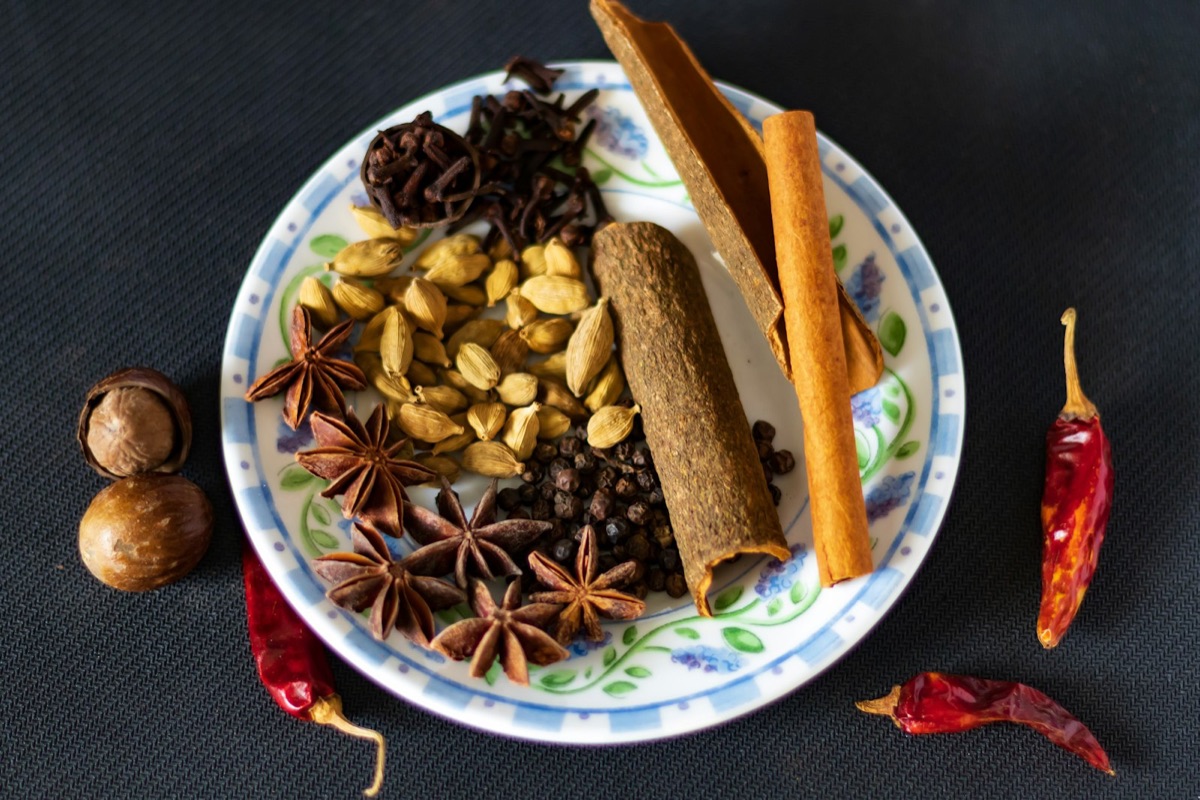
Here's the part I find genuinely beautiful. Ayurveda — one of the world's oldest healing systems, developed in India over 5,000 years ago — was prescribing specific spices to "cool the fire" inside the body long before modern science had names for inflammation pathways. And when we look at those spices through the lens of today's research, they're working on the same biological targets as astaxanthin, just from a different direction.
In Kerala, on India's southwest coast, turmeric-and-ginger fish dishes have been daily food and medicine for generations. Cooking fatty fish with anti-inflammatory spices isn't a trendy fusion — it's convergent wisdom across time and culture. A few of the players:
- Fenugreek — reduces key inflammatory messengers and supports healthy blood sugar.
- Turmeric — contains curcumin, one of the most-studied anti-inflammatory compounds in nature; pair it with black pepper to absorb dramatically more.
- Black pepper — its piperine boosts the absorption of both turmeric and astaxanthin. It's not decoration, it's the amplifier.
- Ginger — quiets the same inflammation enzymes as common pain relievers, without the gut damage.
When astaxanthin from wild salmon meets this spice lineup, you're addressing inflammation from several directions at once — and the healthy fats even help your body absorb more of both the astaxanthin and the turmeric. It's genuinely synergistic, not just delicious.
How much do you actually need?
From food: a 6 oz serving of wild Alaskan sockeye delivers roughly 4–6 mg of naturally derived astaxanthin — along with omega-3s, selenium, vitamin D, B12, and CoQ10, all in a form your body recognizes. Because astaxanthin is fat-soluble, eating it with quality fat (the coconut oil and ghee in the recipe below) meaningfully improves how much you actually absorb.
In supplement form: research typically uses 4–12 mg per day — and a single serving of wild sockeye lands right in that range, which makes food the most elegant delivery system available. If you do supplement, choose natural astaxanthin from Haematococcus pluvialis algae (not synthetic), third-party tested, always taken with a fat-containing meal.
Bring it to your plate
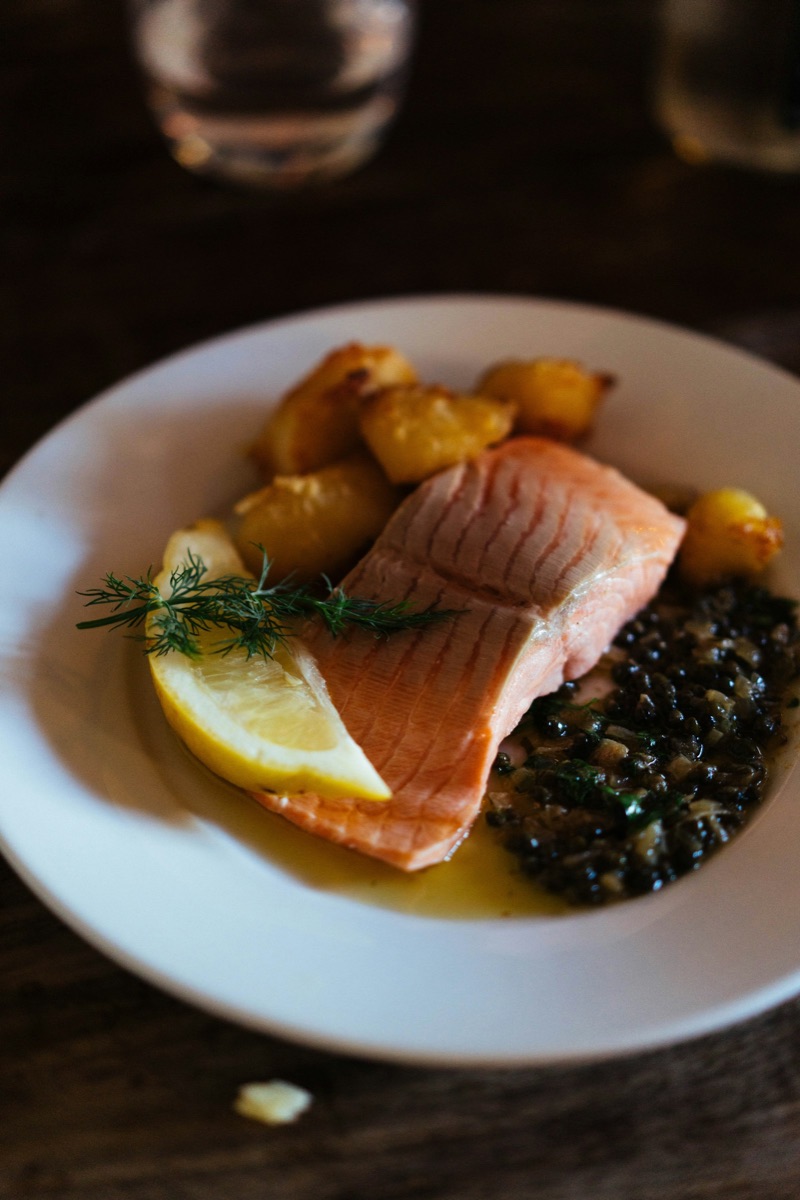
I turned all of this into one of my favorite weeknight dinners — an Ayurvedic fenugreek-crusted wild salmon with coconut ginger sauce, built around the most astaxanthin-rich fish in the ocean and a spice tradition 5,000 years in the making. Every ingredient earns its place — not just for flavor, but for what it does inside your body. (And yes, this is the very dish that turned a 53-year-old non-fish-eater into a wild-salmon believer.)
This is what tending your terrain looks like in a real kitchen: not perfect, not complicated, just real food doing quiet, steady work. More to come.
Sources: 1 Chang, M.X., & Xiong, F. (2020). Astaxanthin and its effects in inflammatory responses and inflammation-associated diseases: recent advances and future directions. Molecules, 25(22), 5342. | 2 Faraone, I., Sinisgalli, C., Ostuni, A., et al. (2020). Astaxanthin anticancer effects are mediated through multiple molecular mechanisms: a systematic review. Pharmacological Research, 155, 104689.
Photos: Janeris Marte, VD Photography, and Phil Hearing via Unsplash.