Holiday Survival Series, Part 4. We're taking the season one piece at a time. So far we've covered how to balance blood sugar during the holidays, how to get better sleep during the holidays, and how to manage holiday stress. This week: the feast itself.
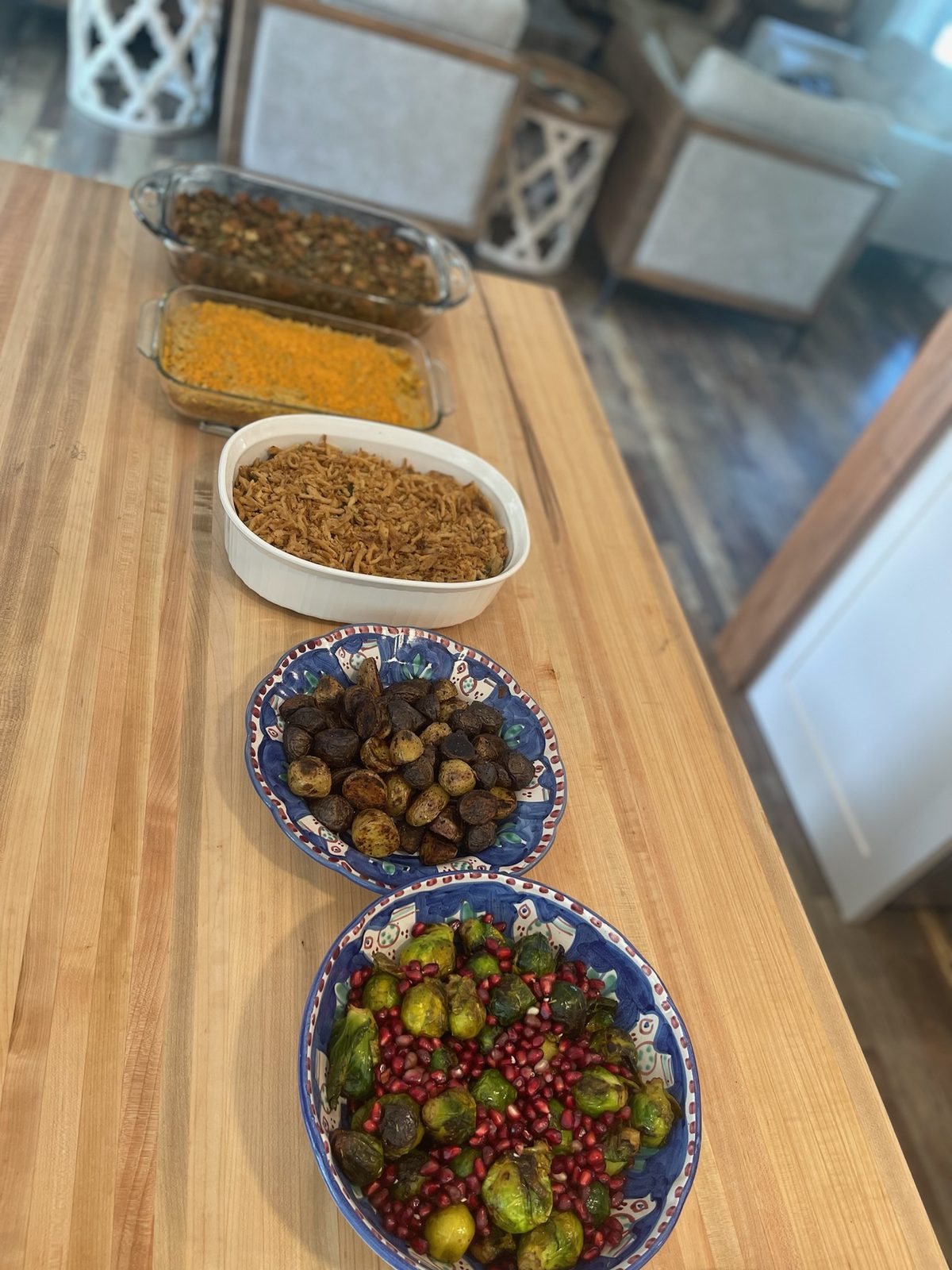
It's Thanksgiving week. The turkey is thawing (hopefully), the pie schedule has been negotiated, and somewhere in the back of your mind a little voice is already whispering, “Remember last year? When you had to unbutton your jeans at the table?”
Yeah. We remember.
Let's be honest about what we're asking our bodies to do this week. Estimates from the Calorie Control Council, a food industry group, put a typical Thanksgiving at somewhere between 3,000 and 4,500 calories.1 That's a lot of food arriving in one sitting, usually on a stressed-out, under-slept body that's been snacking on cookies since Tuesday. Then we wonder why we feel like an overstuffed couch cushion by 4 p.m.
And holiday digestion trouble isn't just a once-a-year thing for a lot of us. In a huge global study of more than 51,000 people in 26 countries, nearly 18% said they deal with bloating at least once a week.2 So if your belly has opinions, you're not alone.
This is part four of my holiday survival series. We've talked about how to balance blood sugar during the holidays, how to get better sleep during the holidays, and how to manage holiday stress. Last week I promised we'd talk about digestion, because you deserve to actually enjoy that feast, not just survive it. So grab a fork (we'll talk about how to use it), and let's do this together.
What your digestion is doing at the holiday table
Here's the thing most people don't know: digestion starts before the first bite. When you smell the turkey or even just think about the stuffing, your brain tells your mouth to start making saliva and your stomach to start making acid. Your body is literally getting the kitchen ready.
From there, digestion works from the top down, like a relay race. Your mouth breaks food down and hands it off to your stomach. Your stomach uses acid to break down protein and hands it off to your small intestine. Each step depends on the one before it. If one runner drops the baton (say, you inhaled your plate in four minutes), everything downstream has to work harder. That's when you get the heavy, bloated, heartburn-y feeling.
And your nervous system runs the whole show. Most of us have heard of “fight or flight” and “rest and digest.” Polyvagal theory, a popular way of describing how the nervous system handles stress (scientists still debate some of its details), adds a third state: “freeze,” or shutdown. You know that holiday moment when you're so overwhelmed you're not even hungry, and then your gut just seems to stall? That's what freeze can feel like.

Digestion happens best in rest and digest. Stress, anxiety and even anger can disrupt your gut, while calming practices boost the rest-and-digest side. So if you're eating Thanksgiving dinner while refereeing a political debate between your uncle and your teenager, your gut is not getting its best shot.
Foundations first: you are what you digest
If you're new here, I work with clients using a foundations first approach: digestion, blood sugar regulation, stress, sleep, and a nutrient-dense way of eating. They all lean on each other, and digestion is a big one, because you're not just what you eat. You're what you digest and absorb. The most nourishing meal in the world doesn't do much good if your body can't break it down.
That's why the first three parts of this series matter here too. Steady blood sugar means you don't show up starving. Good sleep and lower stress mean your body is in a calmer place to digest. It all connects.
And like always, there's no one right way. What works for your sister might not work for you. Read these like a menu, not a prescription, and pick the two or three that fit your table.
8 holiday digestion tips for Thanksgiving week
1. Breathe before you bite.
Before you pick up your fork, take three slow breaths. Long, slow exhales tell your nervous system, “We're safe, we can digest now.” If you tried the cyclic sigh from last week, this is its dinner-table cousin. Bonus points for actually looking at your food and smelling it before you dive in. That's not just being fancy. It's your body warming up its digestive juices.
2. Don't show up starving.
I know the temptation is to skip breakfast to “save room.” Please don't. Skipping meals sets you up for a blood sugar crash, and a starving person does not eat slowly or mindfully. They eat like a raccoon that found an open trash can. Have a real breakfast with protein, and maybe a small snack before you leave the house. Part one has the whole game plan.
3. Start with a little ginger.
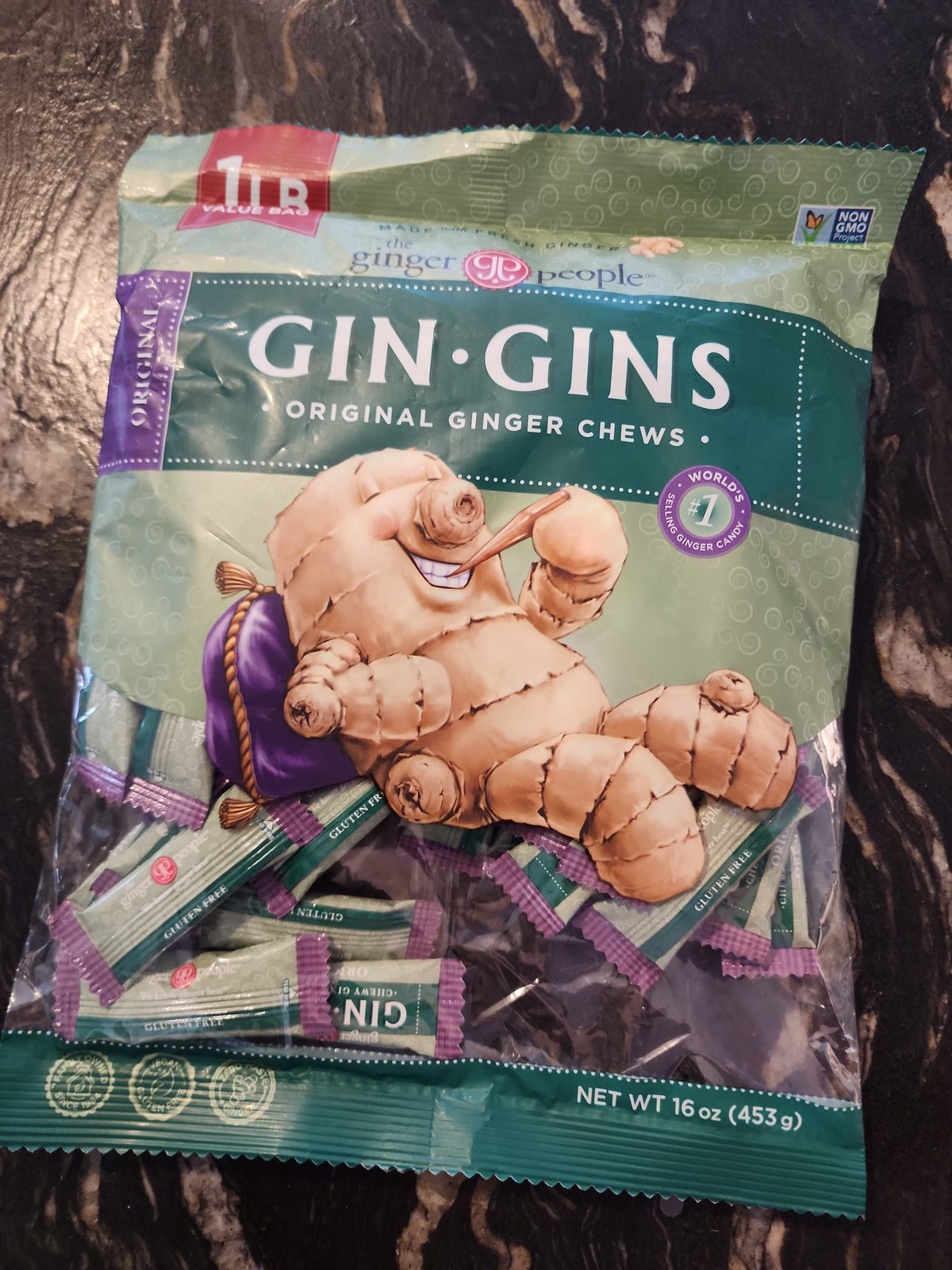
Here's one of my favorite tricks from Ayurveda. About 15 minutes before the meal, eat a thin slice of fresh ginger with a squeeze of lemon and a tiny pinch of salt. It's meant to “light the digestive fire” and get things moving. Not a fan of chewing ginger? A small cup of ginger tea works too. And yes, I keep a bag of ginger chews around for travel days. They're candy, so think of them as an occasional helper, not the fix.
There's some science behind it. In a small study of 24 healthy adults, people who took ginger capsules before a bowl of soup had their stomachs empty about twice as fast as people who took a placebo (half the soup was gone in about 13 minutes instead of 27).3 To be fair, they didn't feel much different, and that was a capsule, not a slice. But a stomach that keeps things moving is a happier stomach, and ginger is cheap, tasty, and already in your kitchen.
4. Chew like you mean it.
Your stomach doesn't have teeth. Every bite you don't chew is a bite your stomach has to deal with in big chunks. In one study, young men who chewed each bite 40 times instead of 15 ate about 12% less at the meal, and their bodies made less of their hunger hormone and more of their “I'm full” hormones.4 You don't need to count to 40 (please don't, your family will think something is wrong). Just put your fork down between bites and actually taste your food. I'm the slowest eater at every table, and I wrote all about why in I'm the slowest eater at every table.
5. Pace the plate, then pause before seconds.
Fill your plate once with the foods you love most. Skip the ones you're only eating because they're there (looking at you, store-bought rolls). Then before you go back for seconds, wait a bit. Talk to someone. Refill your water. Give your body a chance to tell you how full it actually is. Ayurveda has a lovely guideline for this: fill your stomach about one-third with food, one-third with liquid, and leave one-third empty so there's room to digest. Thanksgiving might not be the day you nail that, but “stop at satisfied, not stuffed” is a good goal.
6. Sip, don't chug.
A few sips of warm water or herbal tea with your meal is great. Chugging a giant glass of ice water or a couple of fizzy drinks right on top of a big plate can leave you feeling waterlogged and gassy. Bubbles have to go somewhere. And for a lot of people, alcohol is a heartburn trigger, so if your chest burns after the holiday wine, that might be why. Try sipping most of your water between meals instead of during.
7. Walk it off (gently).
This is the easiest, most underrated digestion tip there is. In a 2021 trial, 94 adults with regular bloating either took a 10 to 15 minute walk after each meal or took a combination of digestive medications for four weeks. Both groups felt better, but the walkers did better on after-meal fullness and bloating than the medication group did.5

And here's a fun one for the family: in another small study, walking after a meal helped the stomach empty faster, but an after-dinner brandy or a shot of espresso didn't.6 So the after-dinner “digestif” is more tradition than treatment. Grab your coat, grab the dogs, grab a cousin, and go around the block. It's good for your blood sugar too.
8. Give it 3 hours before you lie down.
Lying flat on a full stomach is basically an open invitation for heartburn. In a Japanese study, people who went to bed less than three hours after dinner had about seven times the odds of reflux compared with people who waited four hours or more.7 So if Thanksgiving dinner is at 6, maybe hold off on the couch nap and save the recliner for later. Or eat earlier. Ayurveda says our digestive fire is strongest around midday, which makes a 1 or 2 p.m. Thanksgiving dinner sound pretty smart.

And about that nap: it's probably not the turkey's fault. Turkey has about the same amount of tryptophan as chicken or beef. The real culprits are the size of the meal, all the carbs, the drinks, and all that blood heading to your gut to deal with the feast.8 Sorry, turkey. We've been blaming you for years.
When it's more than holiday bloat
A little fullness after a big holiday meal is normal. But if you're bloated most days, have heartburn more than a couple of times a week, or feel like your digestion is always “off,” that's worth a deeper look. In my practice, we look for the root cause instead of just covering up the symptom, and very often digestion is tangled up with one of the other foundations: blood sugar, sleep, stress, or missing nutrients.
Important
Please see your doctor right away if you have trouble or pain swallowing, vomiting, black or bloody stools, unexplained weight loss, or severe or lasting belly pain. If you take an acid reducer or other medication for reflux, don't stop it on your own. Talk with your provider first. The same goes for ginger supplements, digestive enzymes, or other digestive supplements, especially if you take a blood thinner or other medications, since some of them can interact.
Work with a Nutritional Therapy Practitioner in Southwest Missouri and Northwest Arkansas
There's no single right way to fix holiday digestion, because there's no single right body. If bloating, heartburn or a cranky gut has been running the show for a while and you want a plan built around you, I'd love to help. I work with clients in person in Southwest Missouri and Northwest Arkansas, and virtually anywhere in the U.S.
It starts with a free 30-minute discovery call. Book yours here, and let's get you feeling good in your body again, no unbuttoned jeans required. 🌿
Next Monday is the last part of the holiday survival series, all about eating well through the rest of the season. The theme? Add before you subtract. See you then, and happy Thanksgiving!
Sources:
1 Consumer Reports. Calories in your Thanksgiving dinner (citing Calorie Control Council estimates). November 17, 2018.
2 Ballou S, et al. Prevalence and associated factors of bloating: results from the Rome Foundation Global Epidemiology Study. Gastroenterology. 2023;165(3):647-655.
3 Wu KL, et al. Effects of ginger on gastric emptying and motility in healthy humans. European Journal of Gastroenterology & Hepatology. 2008;20(5):436-440.
4 Li J, et al. Improvement in chewing activity reduces energy intake in one meal and modulates plasma gut hormone concentrations in obese and lean young Chinese men. American Journal of Clinical Nutrition. 2011;94(3):709-716.
5 Hosseini-Asl MK, Taherifard E, Mousavi MR. The effect of a short-term physical activity after meals on gastrointestinal symptoms in individuals with functional abdominal bloating: a randomized clinical trial. Gastroenterology and Hepatology from Bed to Bench. 2021;14(1):59-66.
6 Franke A, et al. Postprandial walking but not consumption of alcoholic digestifs or espresso accelerates gastric emptying in healthy volunteers. Journal of Gastrointestinal and Liver Diseases. 2008;17(1):27-31.
7 Fujiwara Y, et al. Association between dinner-to-bed time and gastro-esophageal reflux disease. American Journal of Gastroenterology. 2005;100(12):2633-2636.
8 Cleveland Clinic. Does Thanksgiving dinner make you tired? November 6, 2023.
This information is educational and not a substitute for medical advice. Always consult your healthcare provider before making changes to your medication.
Work with Ashley
If bloating or heartburn is an everyday thing, not just a Thanksgiving thing, let's look at what's really going on underneath. It starts with a free 30-minute discovery call.
See How We Work Together